
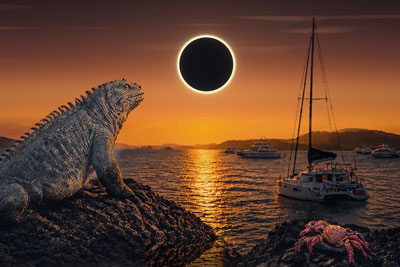

Galápagos Annular Eclipse Tour
January 18 – 27, 2028
Eclipse day: January 26
(LIMITED SPACE AVAILABLE)
On January 26, 2028, the sun will briefly vanish behind the moon’s edge and leave a blazing ring of light, an annular solar eclipse. Our Galápagos 2028 Ring of Fire expedition pairs that once-in-a-lifetime event with a voyage through one of the most extraordinary wildlife destinations on Earth.
Eclipse viewing from solid ground
Most eclipse cruises watch the sky from a moving deck. Ours takes a different approach: you’ll watch from a beachfront hotel with room to set up your equipment and the stability to capture sharp, high-quality images. Whether you’re a dedicated astrophotographer or simply want to witness the event without distractions, you’ll have the space to focus on the sky.
A cruise through the heart of the archipelago
The journey begins at Baltra Island and sails west through the heart of the Galápagos, finishing at San Cristóbal. Along the way, you’ll encounter some of the islands’ most remarkable wildlife.
The Historic Center of Quito: Step Back in Time:
Picture cobblestone streets lined with colonial balconies, church bell towers rising above terracotta roofs, and a city square that has been the heart of public life for nearly five centuries. That’s the historic center of Quito, Ecuador, and it’s one of the most beautifully preserved colonial districts in the Americas.
Why it’s worth planning now
This is a rare chance to combine two extraordinary experiences: a journey through the Galápagos and a front-row seat to a celestial spectacle that won’t return to this part of the world for years. Secure your place early and prepare for a trip you’ll remember for a lifetime.

Compiling all the data from the eclipse is one of my favorite things to do. I am able to create one image that shares the full experience. This image was created by imaging the eclipse with a Sony A1 camera and a 600mm lens, while the center image was created with a Lunt 80mm double stack Ha scope.
IMPORTANT DETAILS
Ecuador:
Galápagos and Quito
$14,995.00 USD P/P.
Double Occupancy Only.
Cabin Upgrades Available.
To reserve a spot on this workshop, we require a $3,000.00 deposit per person
Only 14 guests
with
2 Photo guides
2 hours
and
52 minutes
5 minutes
and
44 seconds
Beginner
to
Professional
10 days
and
9 nights
Register for the 2028 Galápagos Ring of Fire Eclipse Tour »

THE ECLIPSE SITE — GALAPAGOS, ECUADOR
Witness the Ring of Fire from Puerto Ayora, Santa Cruz Island
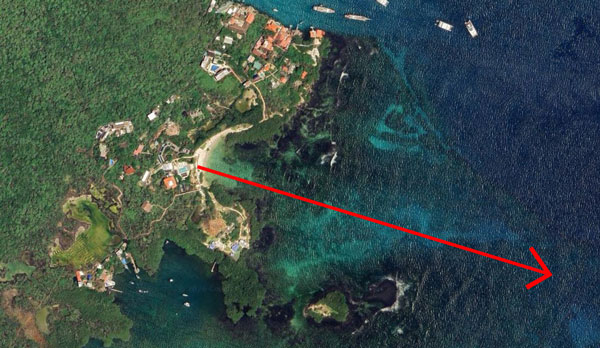
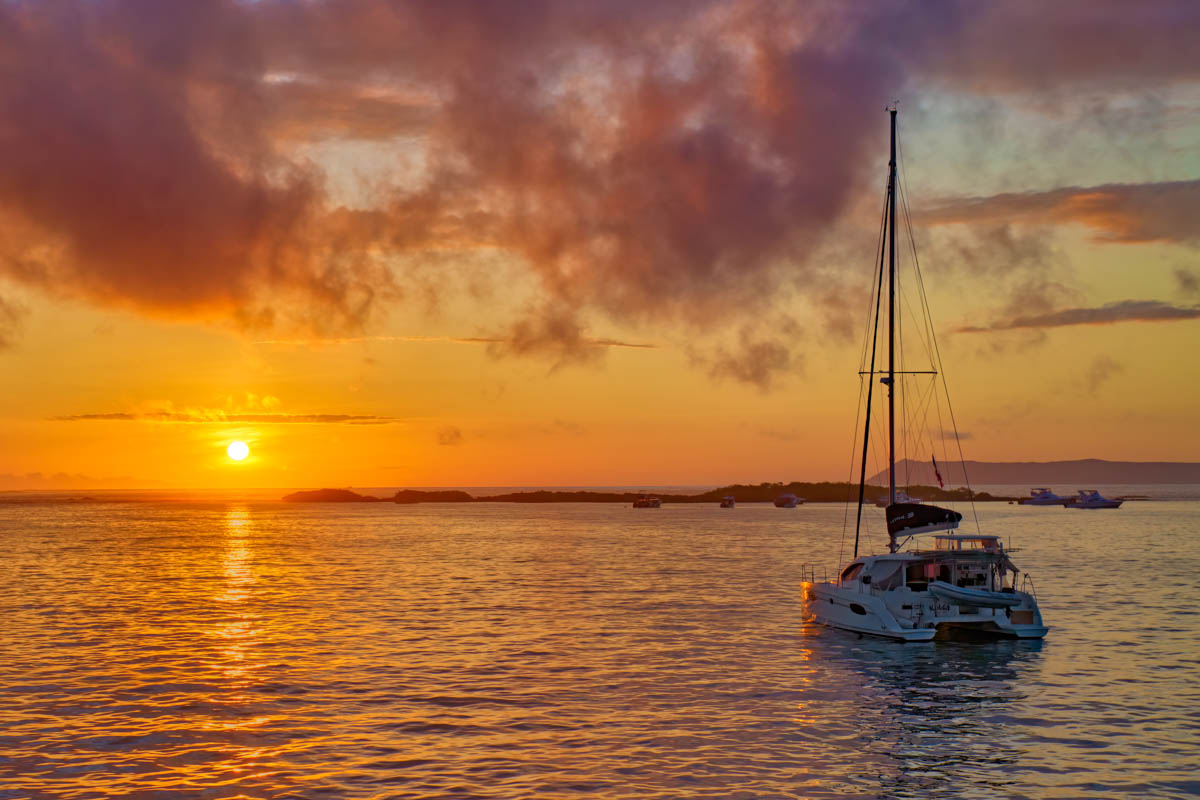
Our beachfront hotel location for photographing the eclipse, and the direction during the ring of fire.
- Nearly three hours of eclipse: The event lasts 2 hours and 52 minutes from start to finish.
- Almost six minutes of the Ring of Fire: For 5 minutes and 44 seconds, the moon will leave a blazing ring of sunlight in the sky.
- Private space for our group: We’ve reserved a dedicated area so everyone has room to spread out, set up cameras, and position telescopes. Plenty of space to set up is one of the main reasons we chose this site.
- Meals and comfort on site: An on-site restaurant with air conditioning and a beachside bar are included with all meals.
- A beautiful beach: Relax on sand beside crystal-clear water before and after the eclipse.
Register for the 2028 Galápagos Ring of Fire Eclipse Tour »
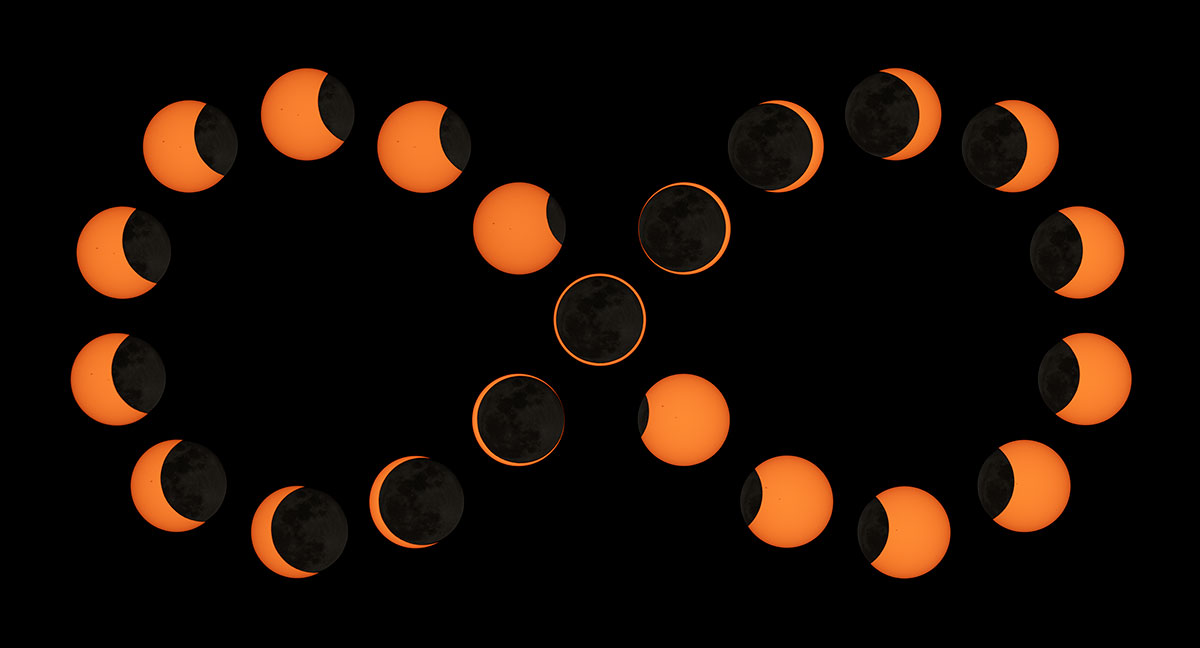
The full sequence of the annular eclipse that swept through Utah in 2023. I rotated the sun to the correct orientation as it was imaged on an astronomical mount and imaged the full moon phase of the same cycle to create this composite sharing all my experiences for my wonderful time in Utah.
ITINERARY
Day 1 – January 18th, 2028
As we begin the 2028 Galápagos Ring of Fire Tour, our representative will greet you upon your arrival in the airport in Quito, Ecuador. Your driver will escort you to your hotel for the next two nights, a historic colonial-style seventeenth-century building, just outside Quito, the second-largest city in this beautiful country.
The hotel has beautiful gardens whose trees are centuries old. If you have any free time, take advantage of the gardens and look for the 33 species of birds that regularly visit.
Tonight, we will have a group dinner to get to know everyone, and talk about the exciting days to come in the Galápagos Islands.
Let the fun begin!
Day 2 – January 19th, 2028
Quito was among the first cities ever named a UNESCO World Heritage Site, in 1978, and walking its streets still feels like stepping into another era.

An Annular Solar eclipse, also know as the Ring of Fire.
La Compañía de Jesús is often called the “Sistine Chapel of the Americas.” Its interior is covered in gold leaf and ornate carvings, and the effect is breathtaking the moment you walk in.
San Francisco Church and Monastery is one of the largest colonial complexes in the Americas. Its courtyards, art, and quiet cloisters offer a peaceful contrast to the bustling streets outside.
The Basílica del Voto Nacional rises dramatically over the city, with Gothic-style towers and gargoyles that will make you stop and stare.
Plazas Full of Life
The center’s plazas are where Quito comes alive. Plaza Grande, the main square, is framed by the Presidential Palace (Carondelet Palace) and the Metropolitan Cathedral. Its fountains and open spaces make it the perfect spot to rest, people-watch, and soak in the atmosphere.
Nearby, the narrow lanes of La Ronda offer a glimpse of the city’s traditional side. Here you’ll find colorful shopfronts, local artisans, and cafés where you can sample Ecuadorian coffee and sweets.
Sites we plan to visit:
- Plaza San Francisco and the Church and Convent of St. Francis
- Casa Gangotena (a recently restored historic mansion and boutique hotel)
- Carondelet Palace (the seat of government of the Republic of Ecuador)
- Basilica del Voto Nacional (the largest neo-Gothic basilica in the Americas)
- The Metropolitan Cathedral (one of the oldest and largest Roman Catholic cathedrals)
- Gold leaf interior of the Church of the Society of Jesus
- Church of San Francisco, Church of El Sagrario and Church of Santo Domingo
After dinner, we spend another night in the historic hotel. Get plenty of rest — tomorrow, we journey to the beautiful Galápagos Islands.
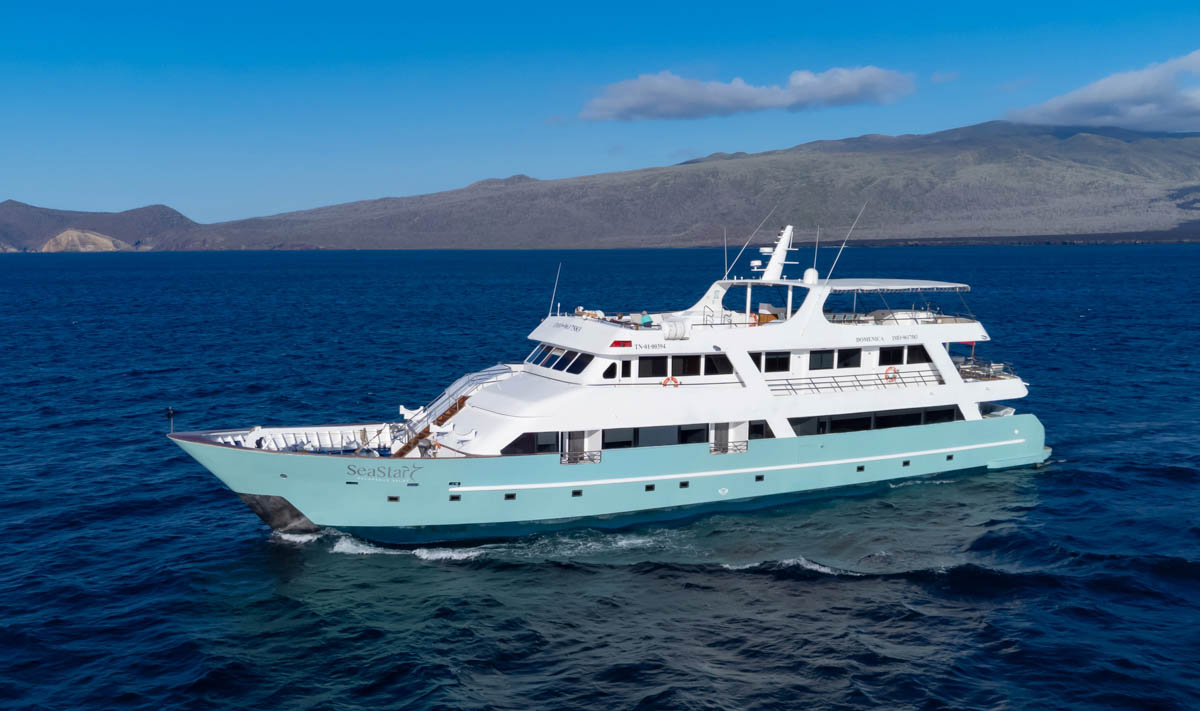
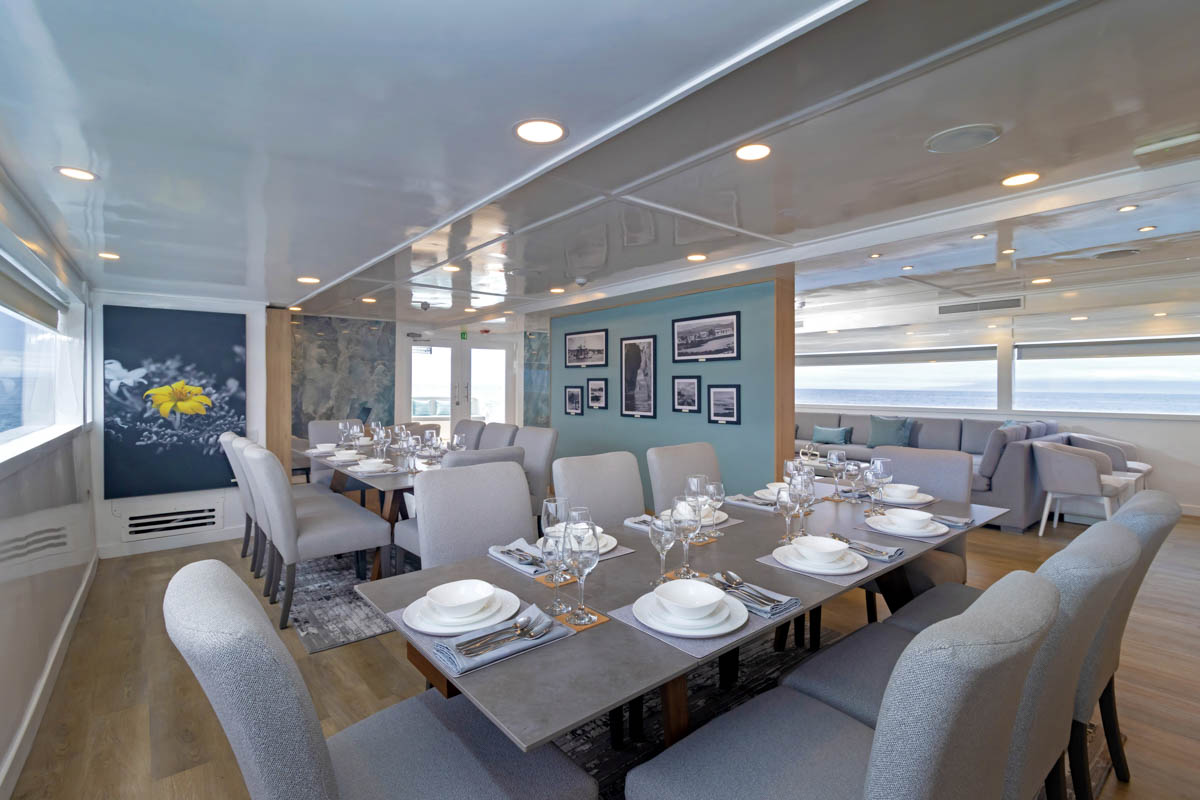
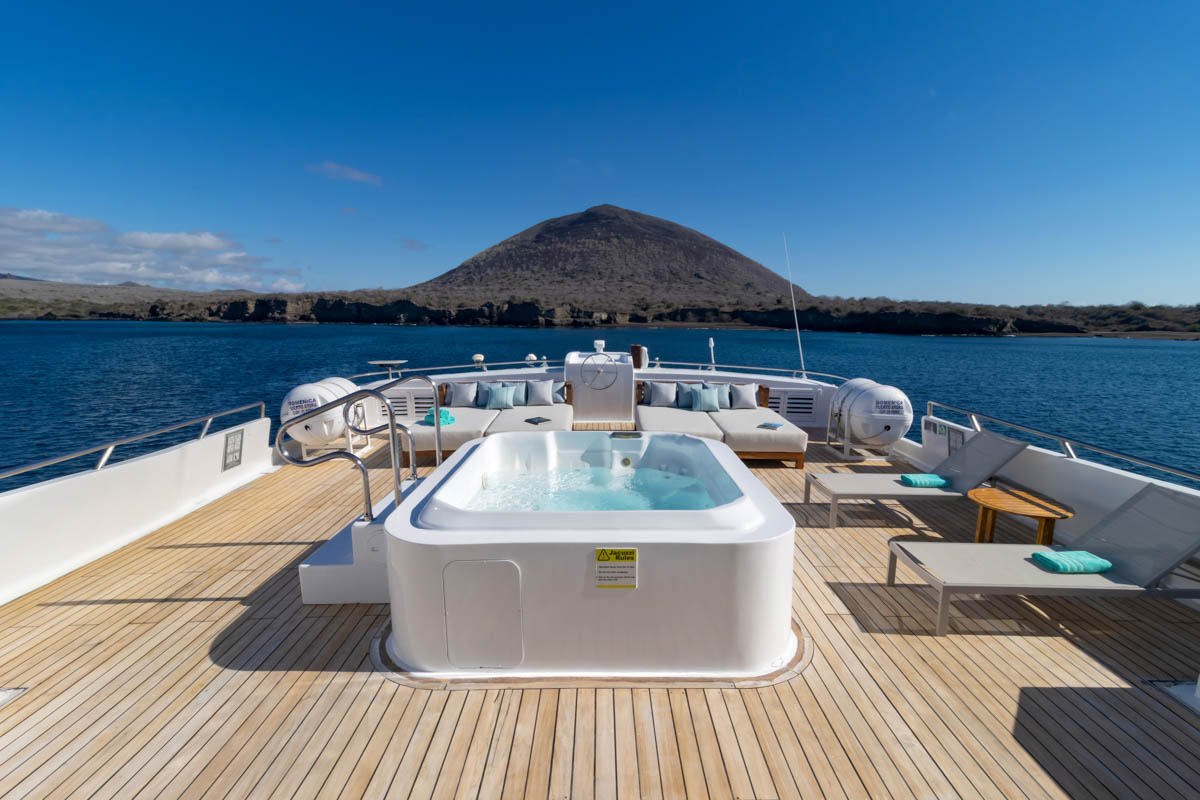
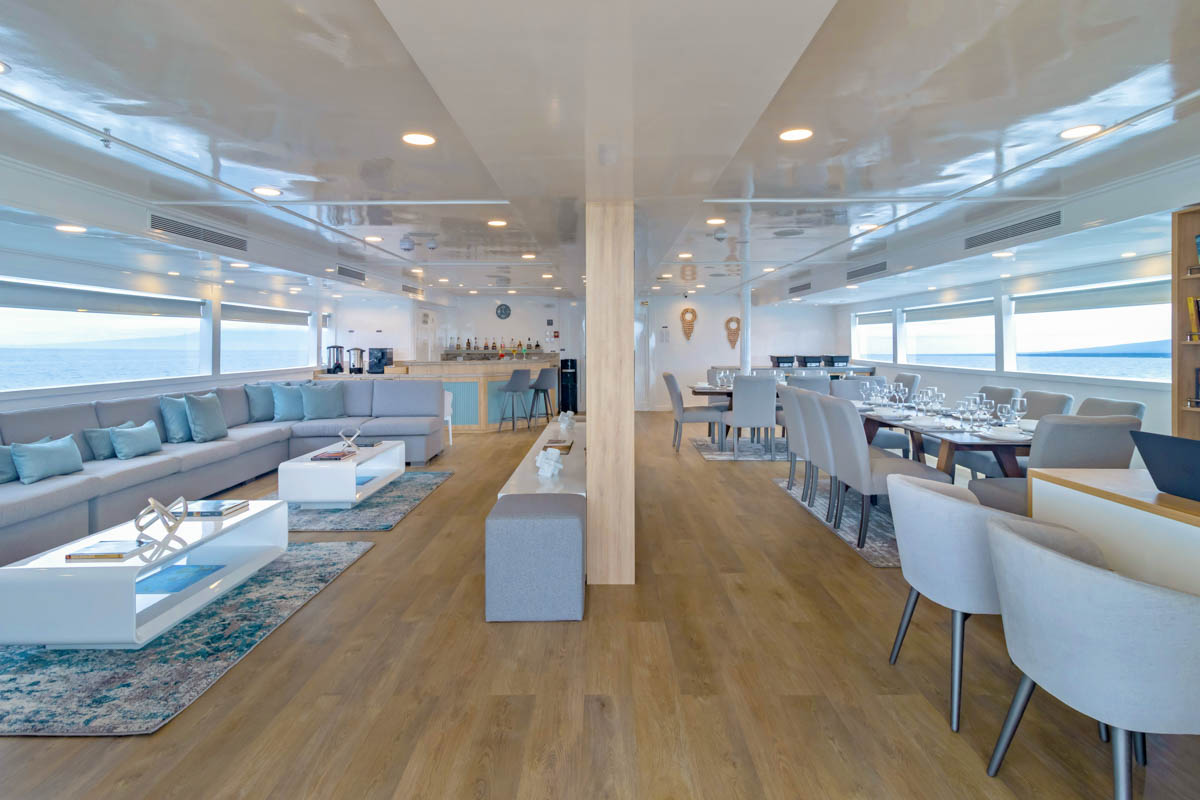
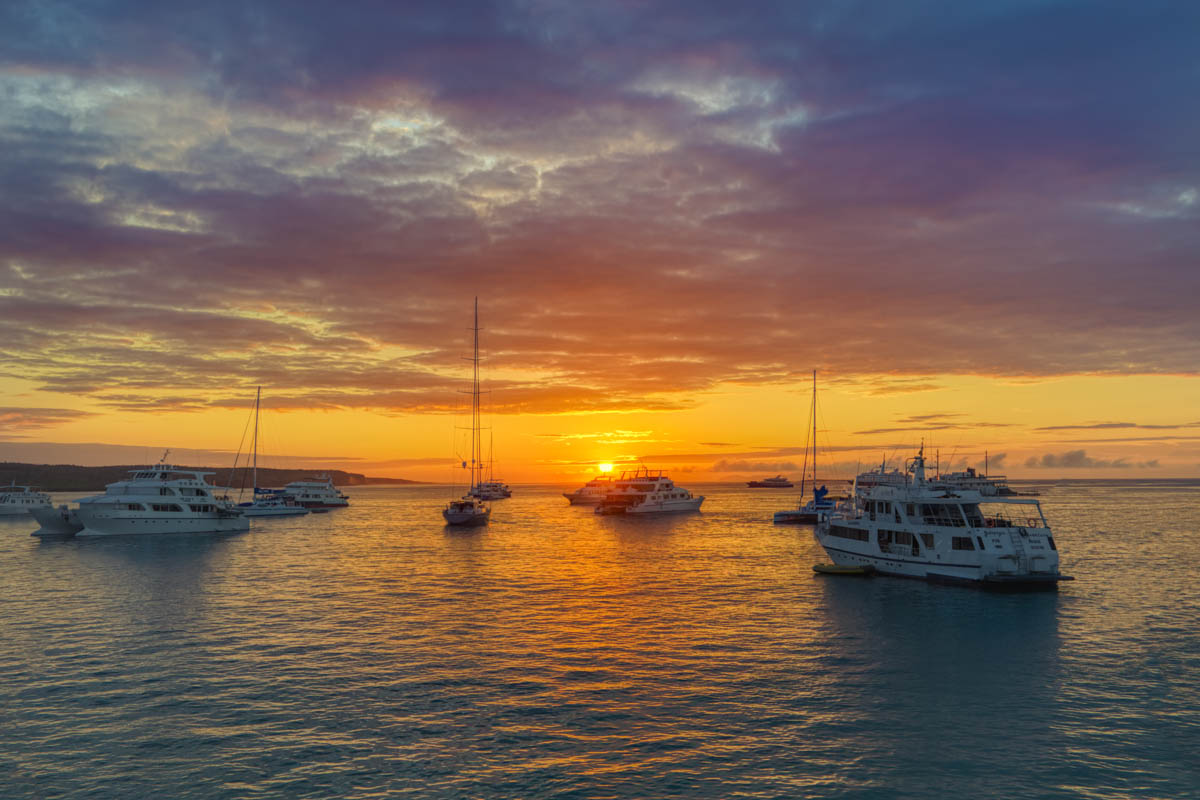
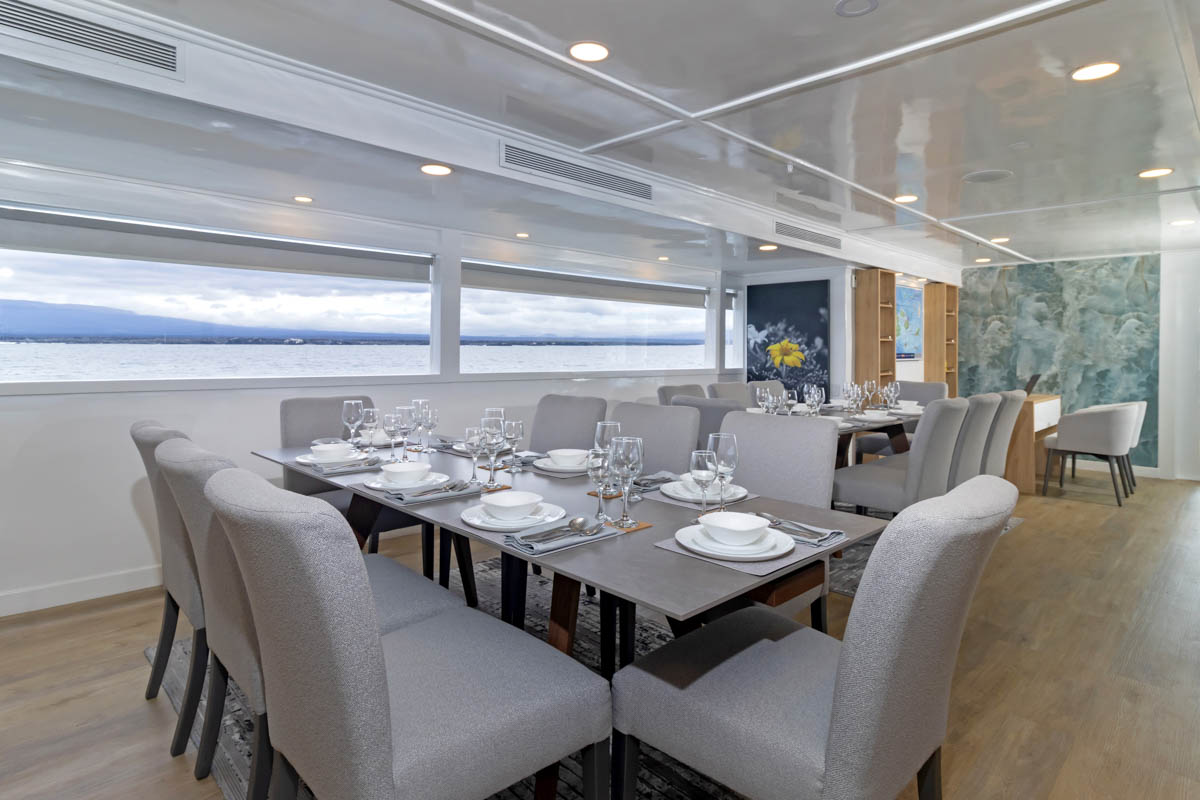
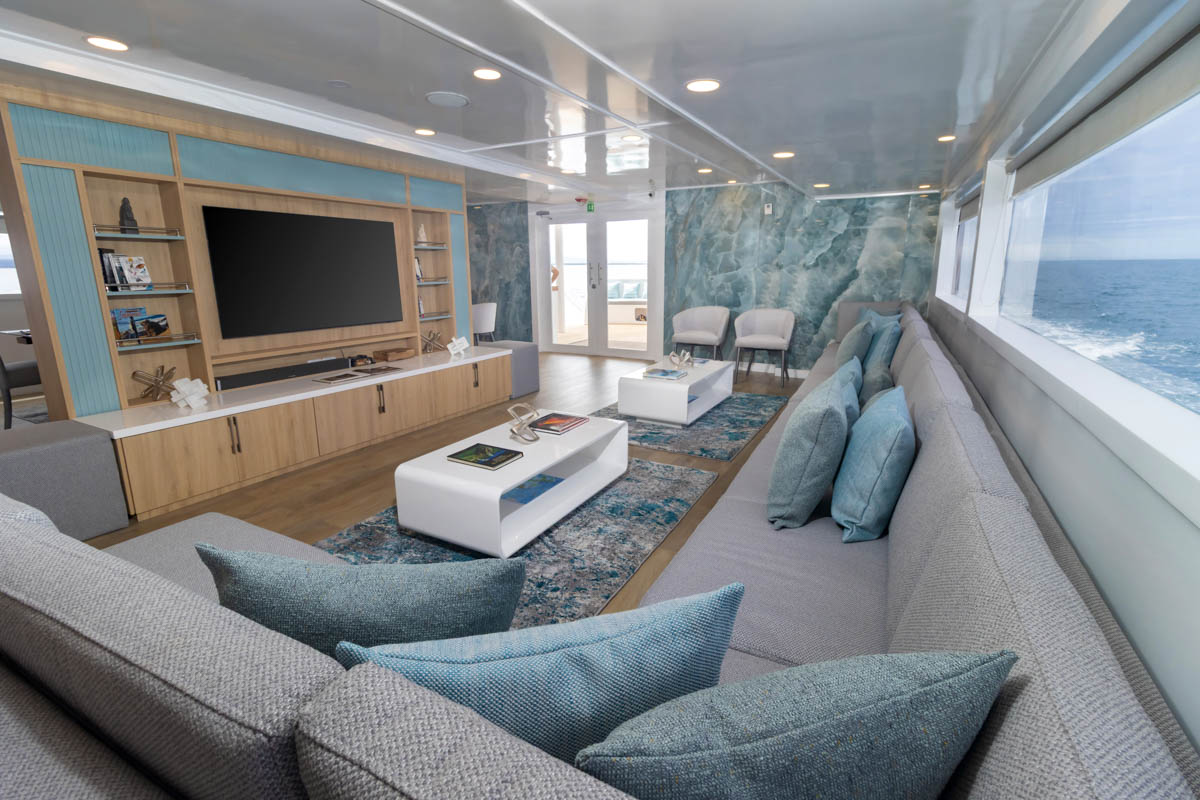
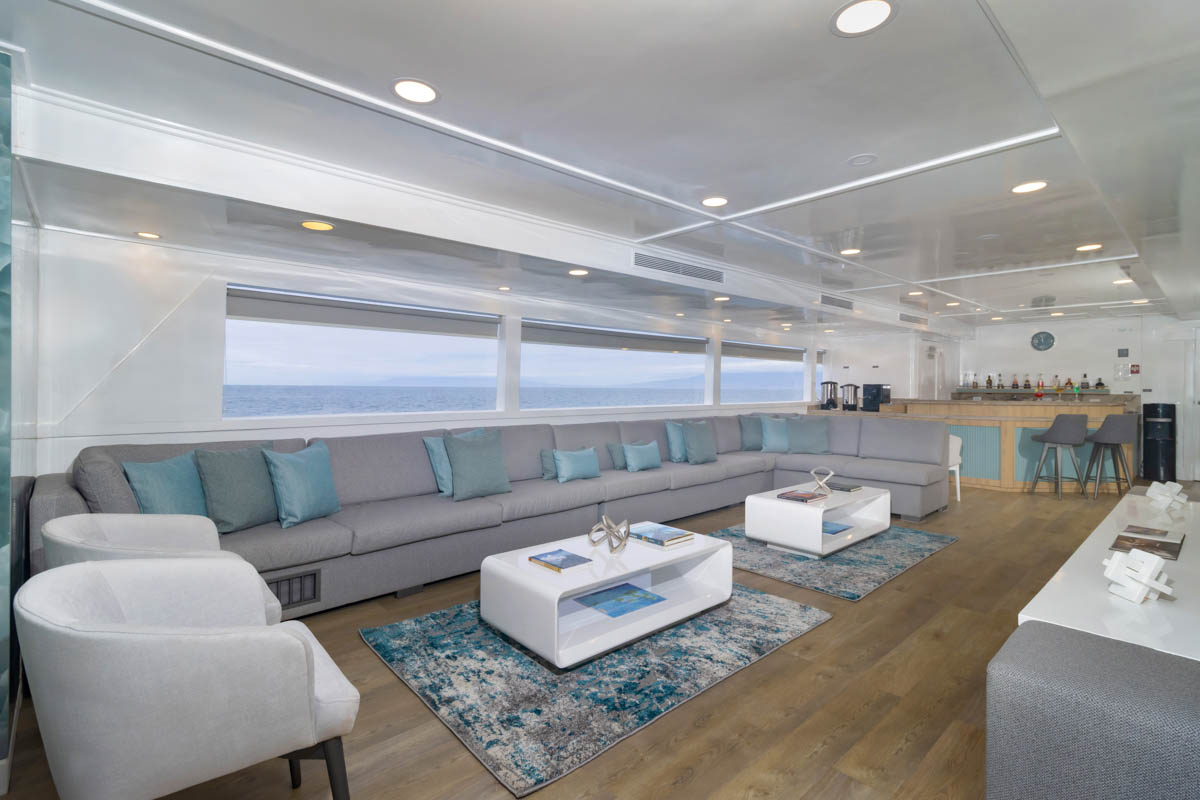
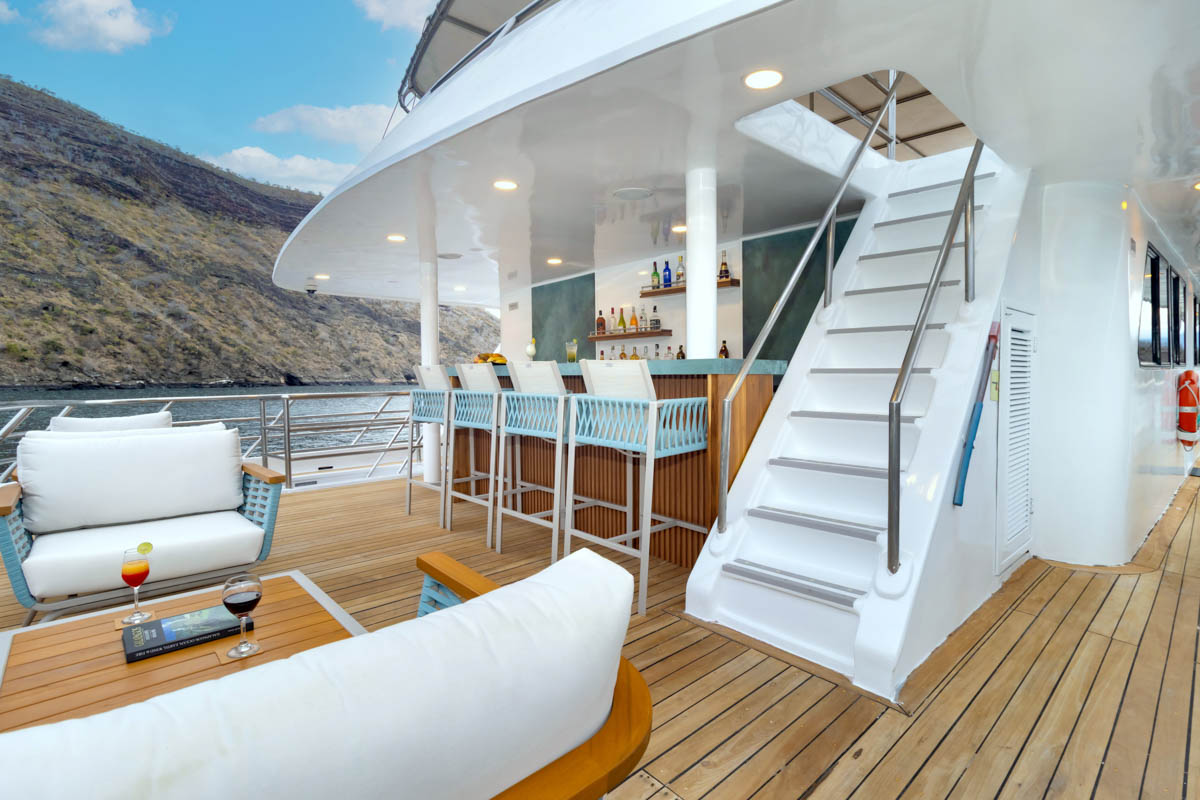
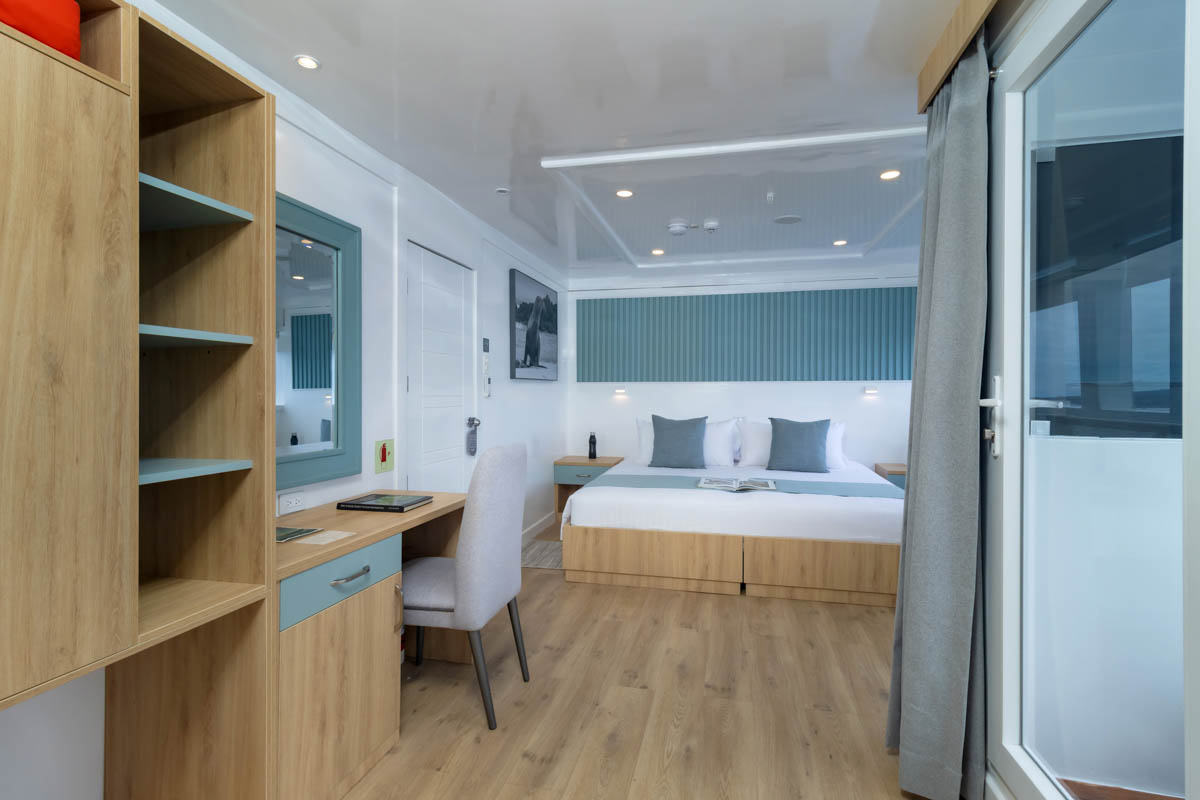
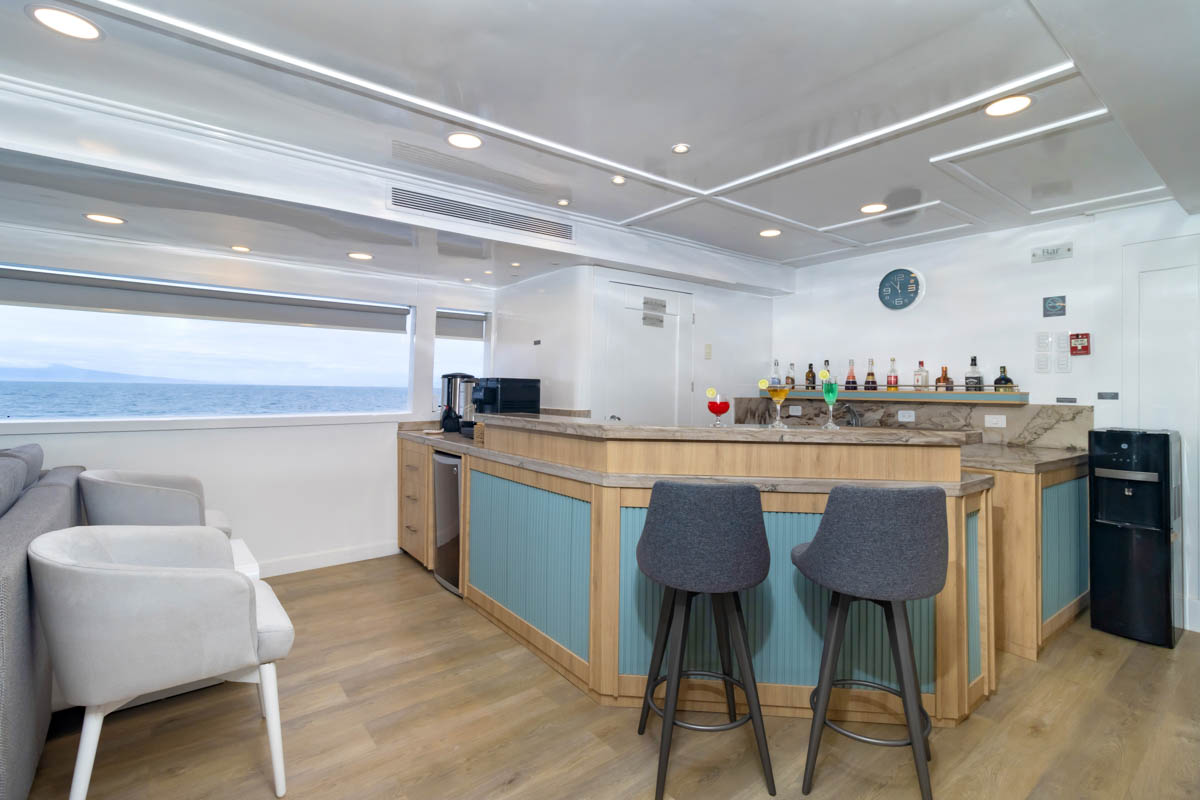
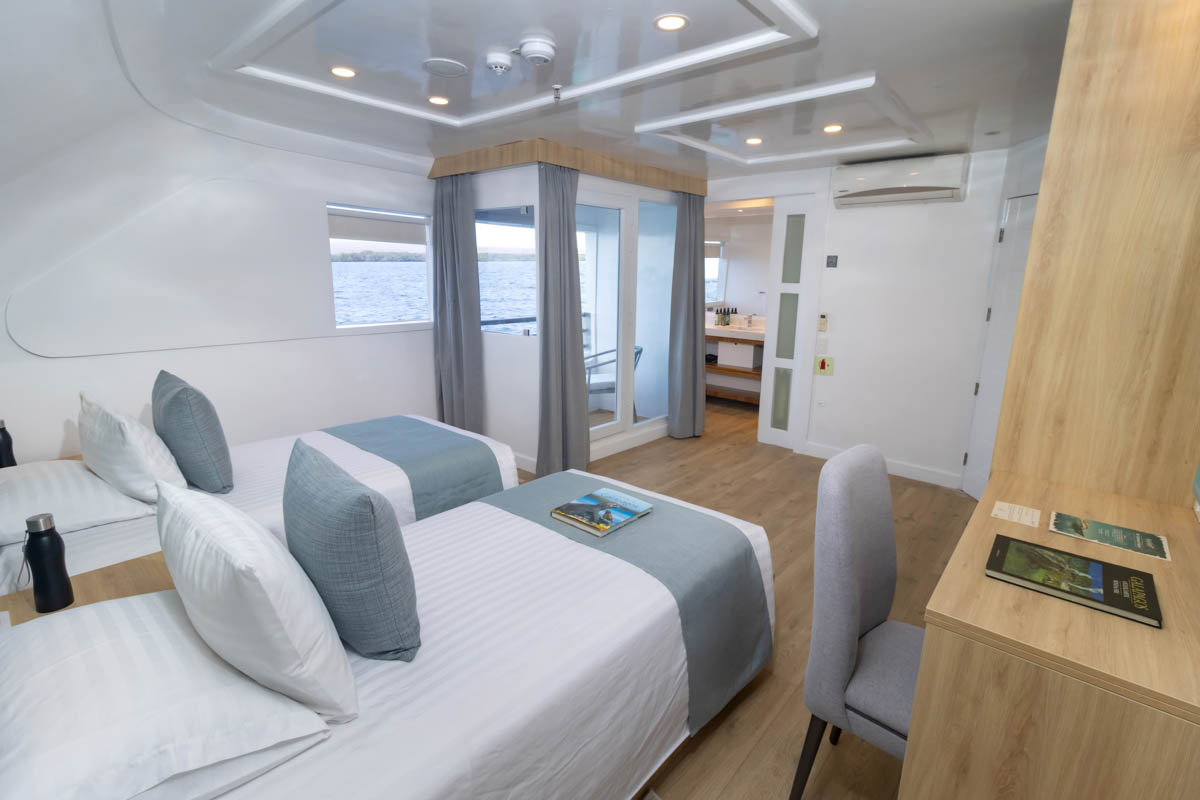
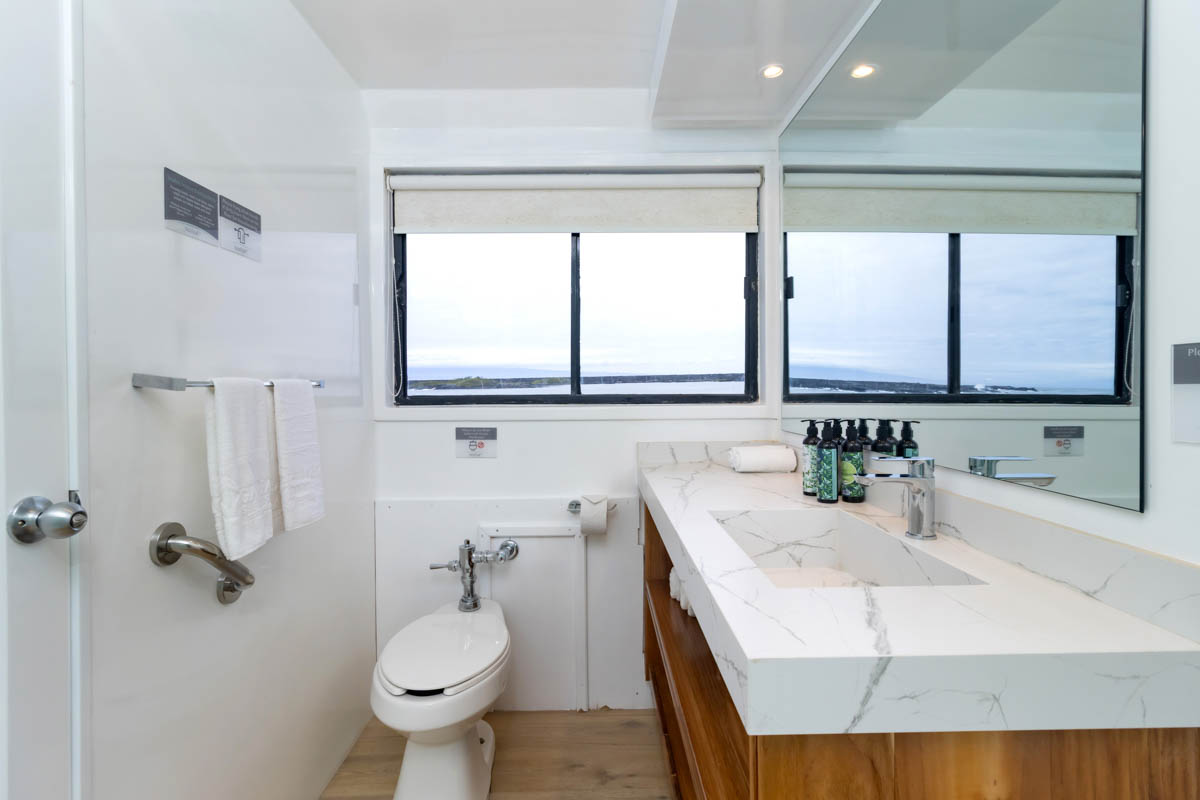
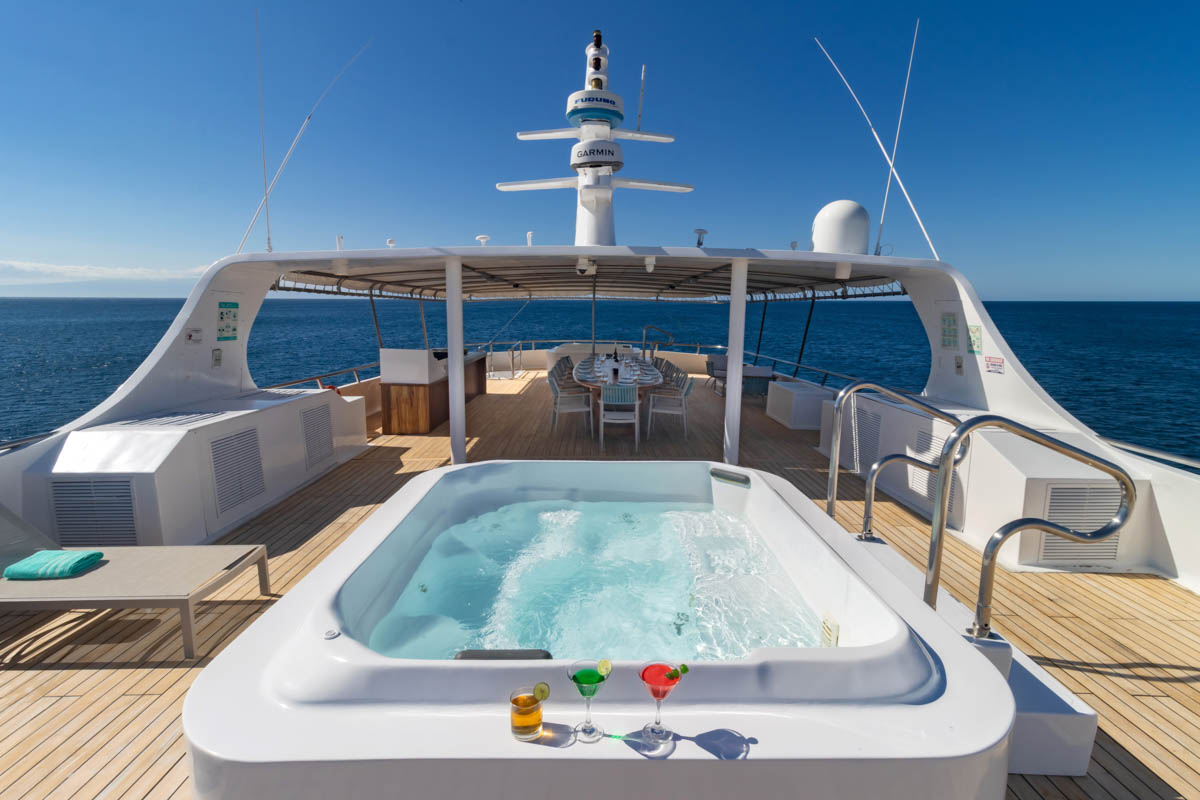
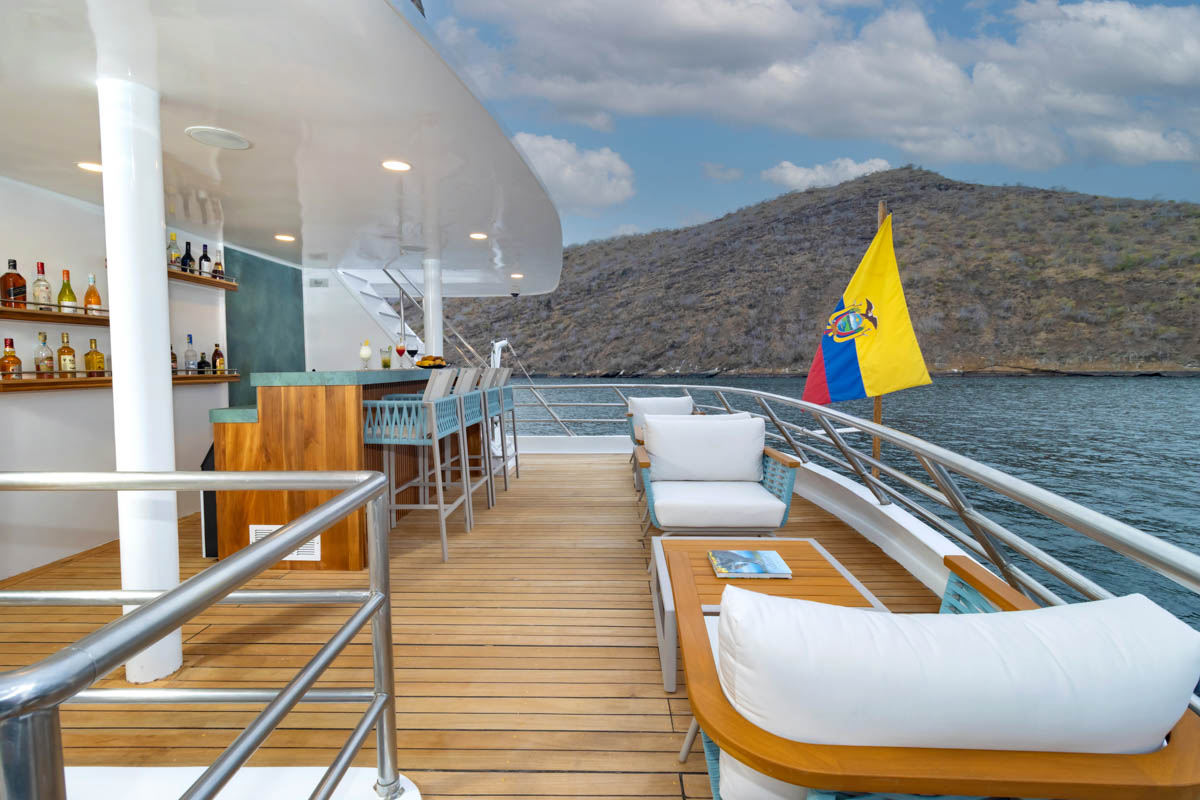
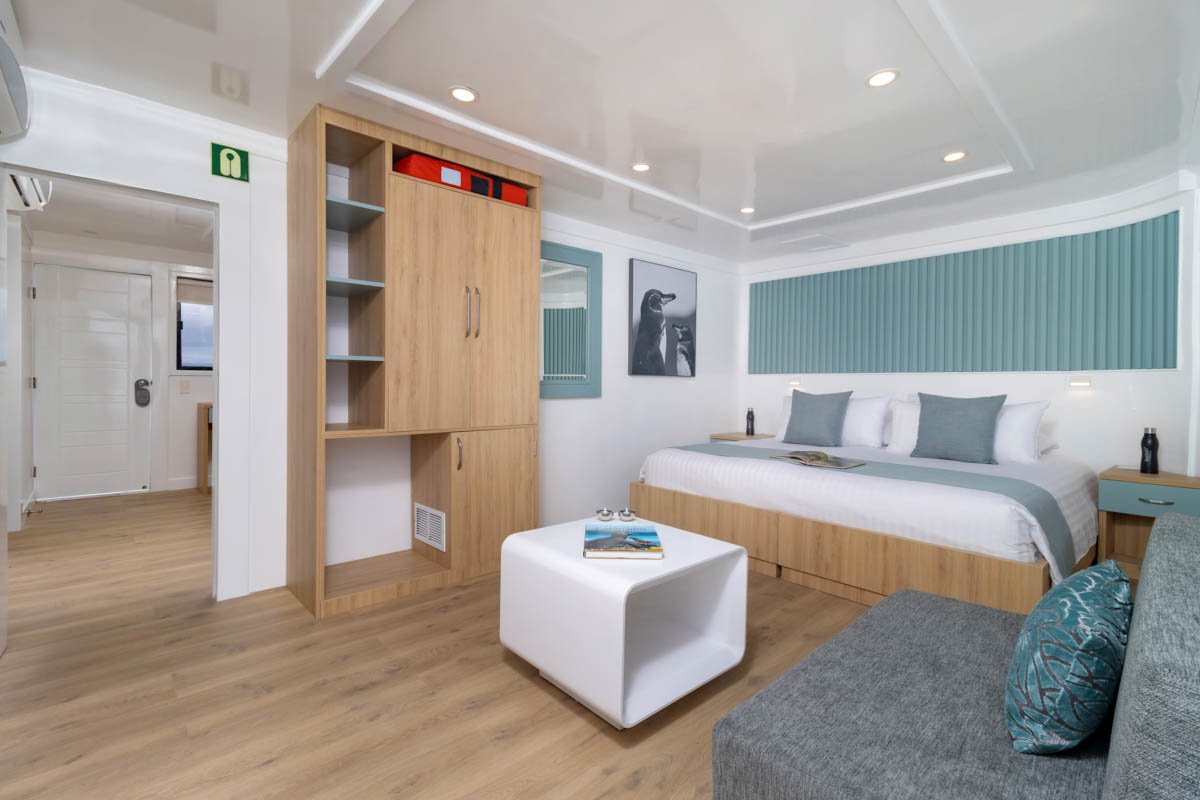
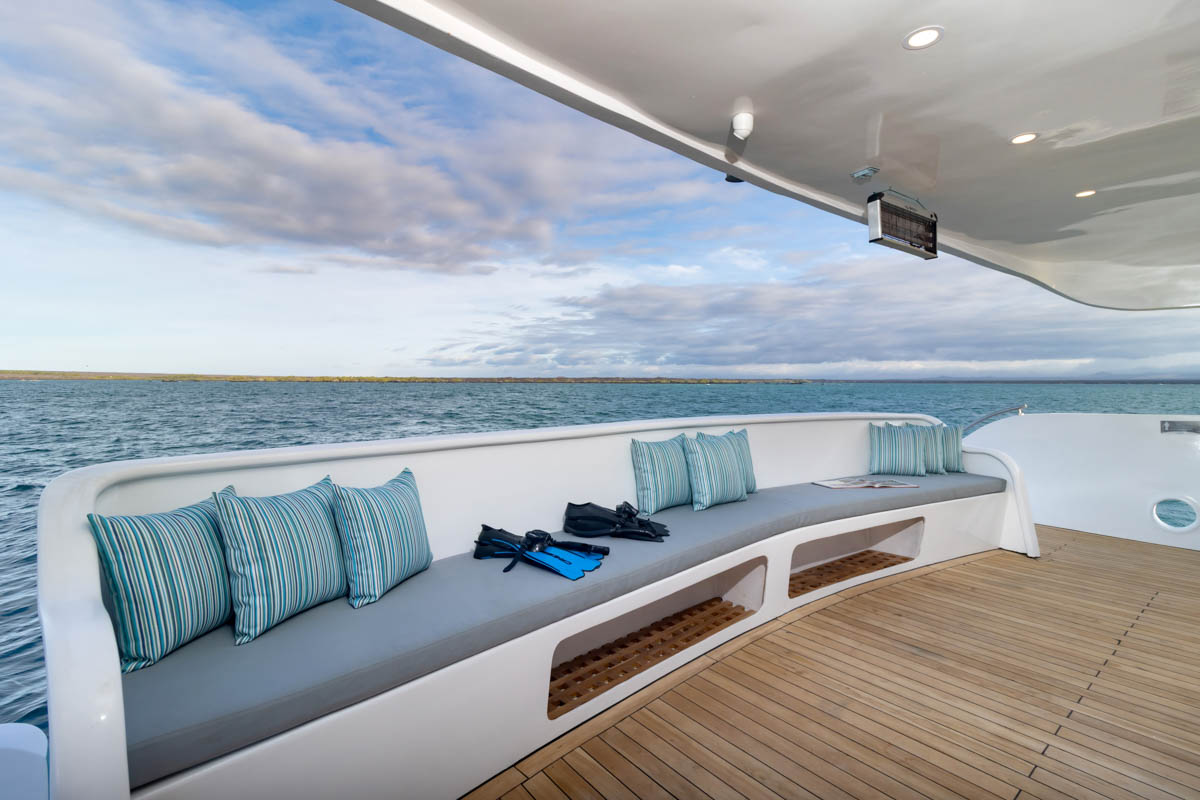
Join us aboard our chartered luxury class yacht and let the archipelago do the rest. This refined motor yacht welcomes just sixteen guests (14 guests, and two trip leaders), so every moment feels intimate, from the sunlit solarium with its Jacuzzi to the saloon where the day’s wildlife sightings get shared over drinks. Each stateroom is a calm retreat between island landings. Contemporary comfort, private space, and the wild beauty of the Galápagos come together in one unforgettable voyage.
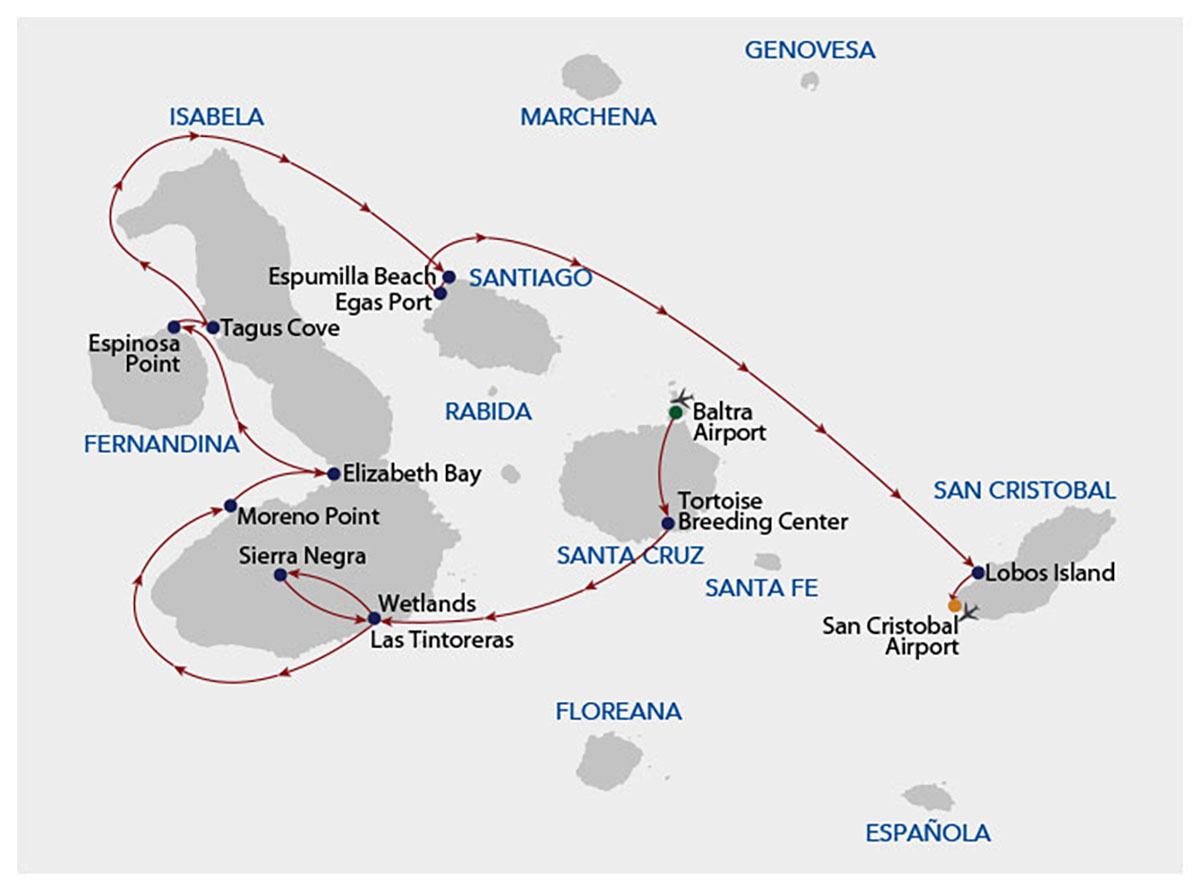
Our Galapagos Islands planned route aboard a luxury yacht.
Day 3 – January 20th, 2028
Journey to the Galápagos: From the Andes to the Islands
We leave Quito early this morning and fly to Baltra Island, the gateway to the Galápagos. As you approach the archipelago from the air, look out the window: the islands’ volcanic origins are written across the landscape below, with dark lava fields, craters, and rugged coastlines that tell the story of how these islands were formed.
On arrival at Baltra, our naturalist guide will meet us at the airport and welcome the group to the islands. From the first moment, you’ll be in the company of someone who knows these islands intimately and can help you understand what you’re seeing.
Visit the Fausto Llerena Tortoise Center on Santa Cruz Island
On the way to our yacht, we’ll stop at the Fausto Llerena Tortoise Center on Santa Cruz Island. This long-term conservation program is run jointly by the Galápagos National Park Directorate and the Charles Darwin Foundation, and it has been working to protect the islands’ giant tortoises for decades.
The center’s work began to save the giant tortoise population on Pinzón Island, and it continues today as one of the archipelago’s most important conservation efforts. Here, you can see tortoises at every stage of life, from tiny hatchlings and young juveniles to full-grown adults. Watching them up close is a memorable way to see the Galápagos’ conservation story in action.
We will then continue to our chartered luxury yacht, our home for the next 6 days. Meet the crew, get comfortable on the yacht, and enjoy a nice dinner.


Day 4 – January 21st, 2028
Las Tintoreras – Isabela Island
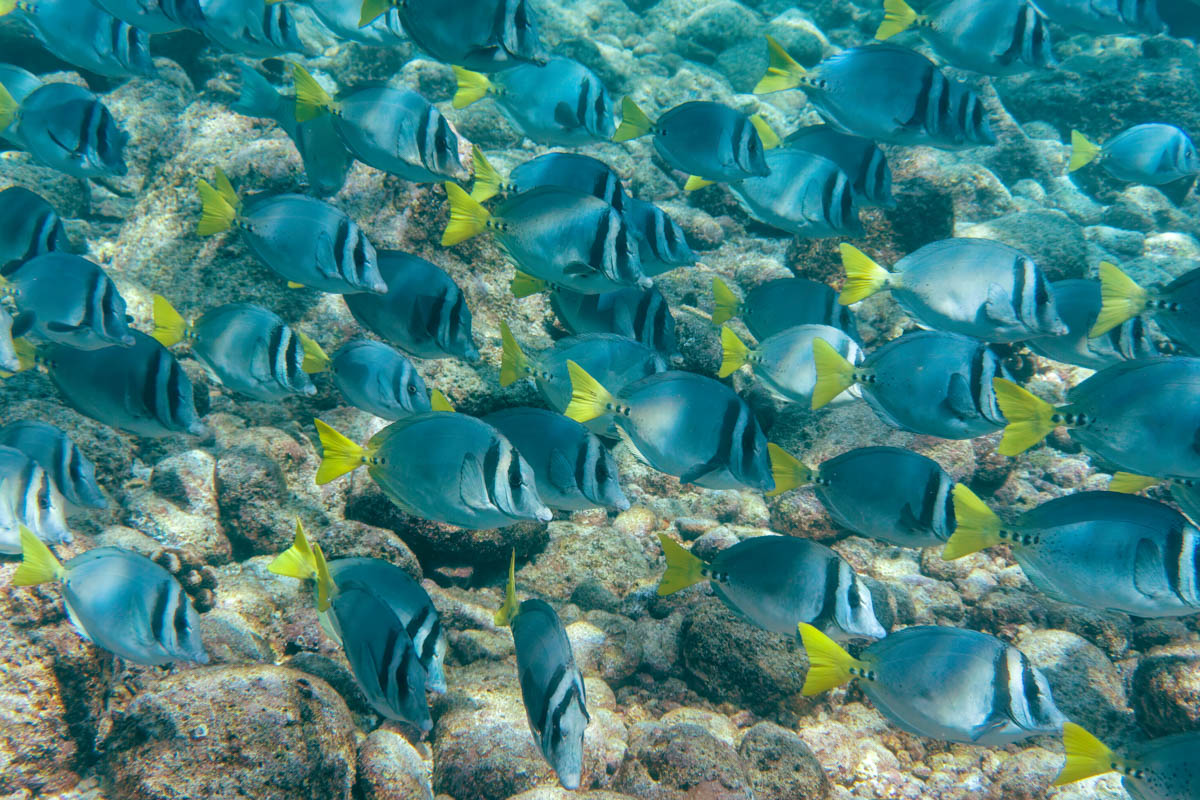
The Tintoreras islets sit a short boat ride from Puerto Villamil, and they’re one of the best places in the Galápagos to see wildlife up close. The turquoise, crystal-clear water is home to white-tipped reef sharks, Galápagos penguins, and marine turtles, and sea lions often appear along the shore. One beach, surrounded by mangroves, is one of the few places where marine iguanas can breed successfully. The panga (zodiac) ride out to the islets is a pleasure in its own right.
Highlights:
- White-tipped reef sharks: fairly common in the waters around the islets
- Galápagos penguins: often seen along the shoreline
- Marine turtles: swimming in the shallows
- Galápagos sea lions: often hauled out on the shore
- Marine iguanas: breeding on the mangrove-lined beach
- Lava herons: perched on the mangrove branches, watching for prey
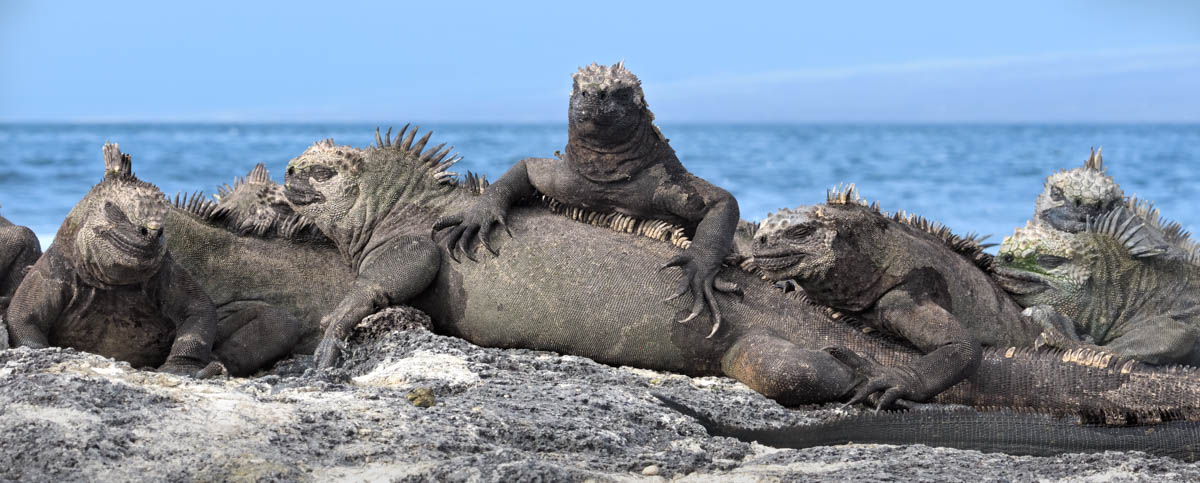
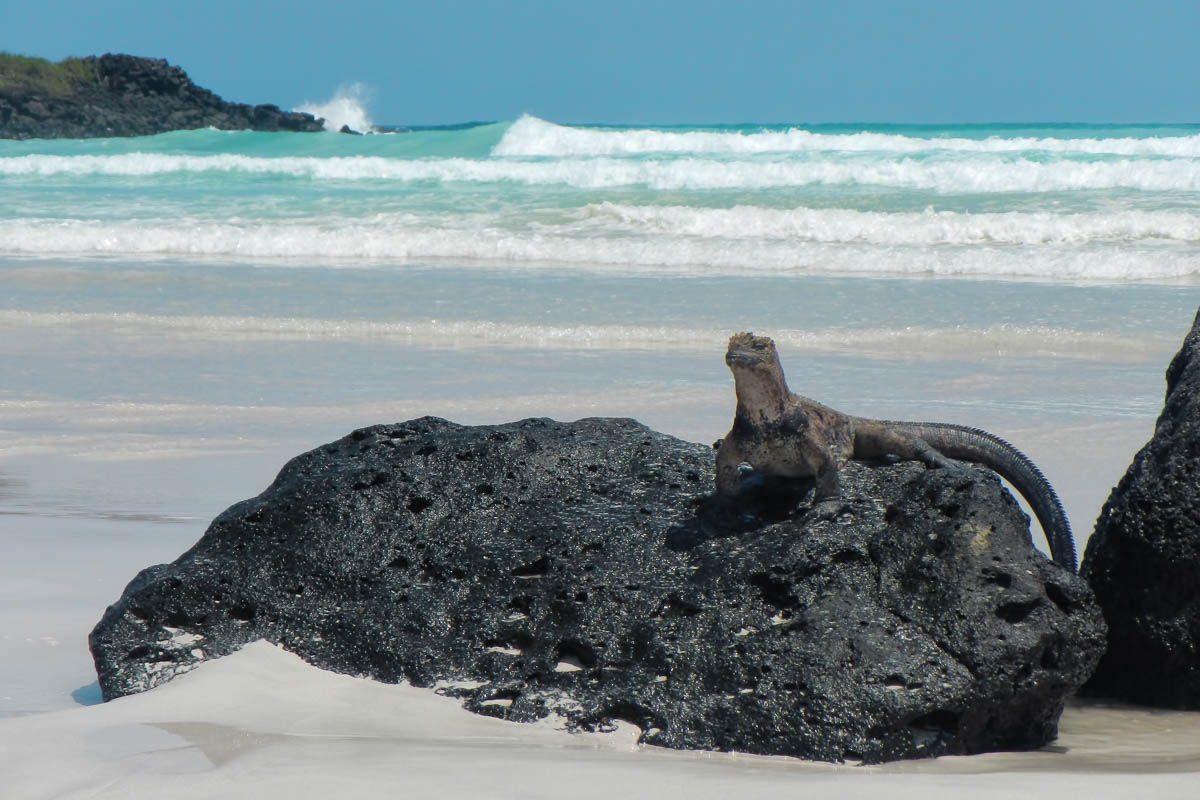
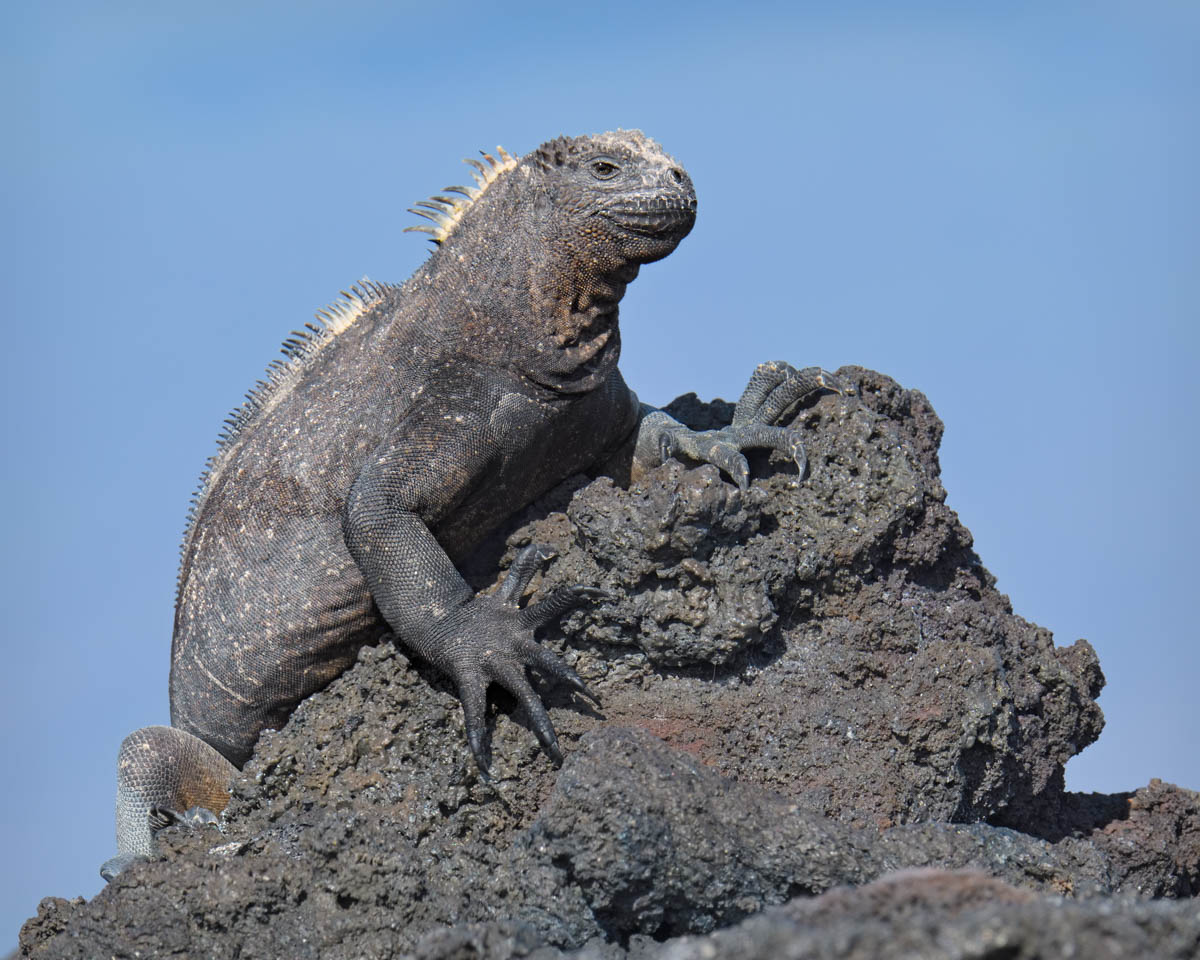
Marine iguanas get along well with others, but compared to birds and mammals who live in similarly large groups, they’re not as expressive of their friendship. You’re more likely to see them lying around having a nap than grooming each other.
Sierra Negra Volcano – Isabela Island
Sierra Negra is home to the largest basaltic caldera in the Galápagos, measuring roughly 9 by 10 km. The views from the rim are impressive, and the highlands offer a chance to spot up to seven species of finch among lush vegetation. On the caldera’s north side, the lava fields show the most recent volcanic activity, from 2005.
Highlights:
- Darwin’s finches: up to seven species in the area, a classic example of adaptive radiation
- Galápagos hawks: often perched on lava rock or fence posts, watching for prey
- Galápagos giant tortoises: grazing in the highland vegetation, especially along the rim trails
- Lava lizards: darting across the dark volcanic rock

The Wetlands – Isabela Island
The Wetlands sit just outside Puerto Villamil and make up a mix of lagoons, swamps, and mangrove forest. They’re home to a range of distinctive birds, including common stilts, whimbrels, white-cheeked pintails, and common gallinules. You can explore the area on foot along a path that winds through the swamps.
Highlights:
- Common stilts: long-legged shorebirds wading in the shallow lagoons
- Whimbrels: migratory shorebirds with long, curved bills, probing the mudflats
- White-cheeked pintails: dabbling ducks that gather on the water
- Common gallinules: dark waterbirds moving through the swamp vegetation
- Lava herons: perched quietly at the water’s edge, waiting to strike
- Giant mangroves
Day 5 – January 22nd, 2028
Moreno Point – Isabela Island
Moreno Point lies near Elizabeth Bay on Isabela’s west coast. A dinghy ride along its dramatic rocky shoreline reveals a wealth of birdlife, and a hike over the lava rock trail leads to tide pools and mangroves, making it a birdwatcher’s delight. The tide pools are also a good place to spot green sea turtles and white-tipped reef sharks.
Highlights:
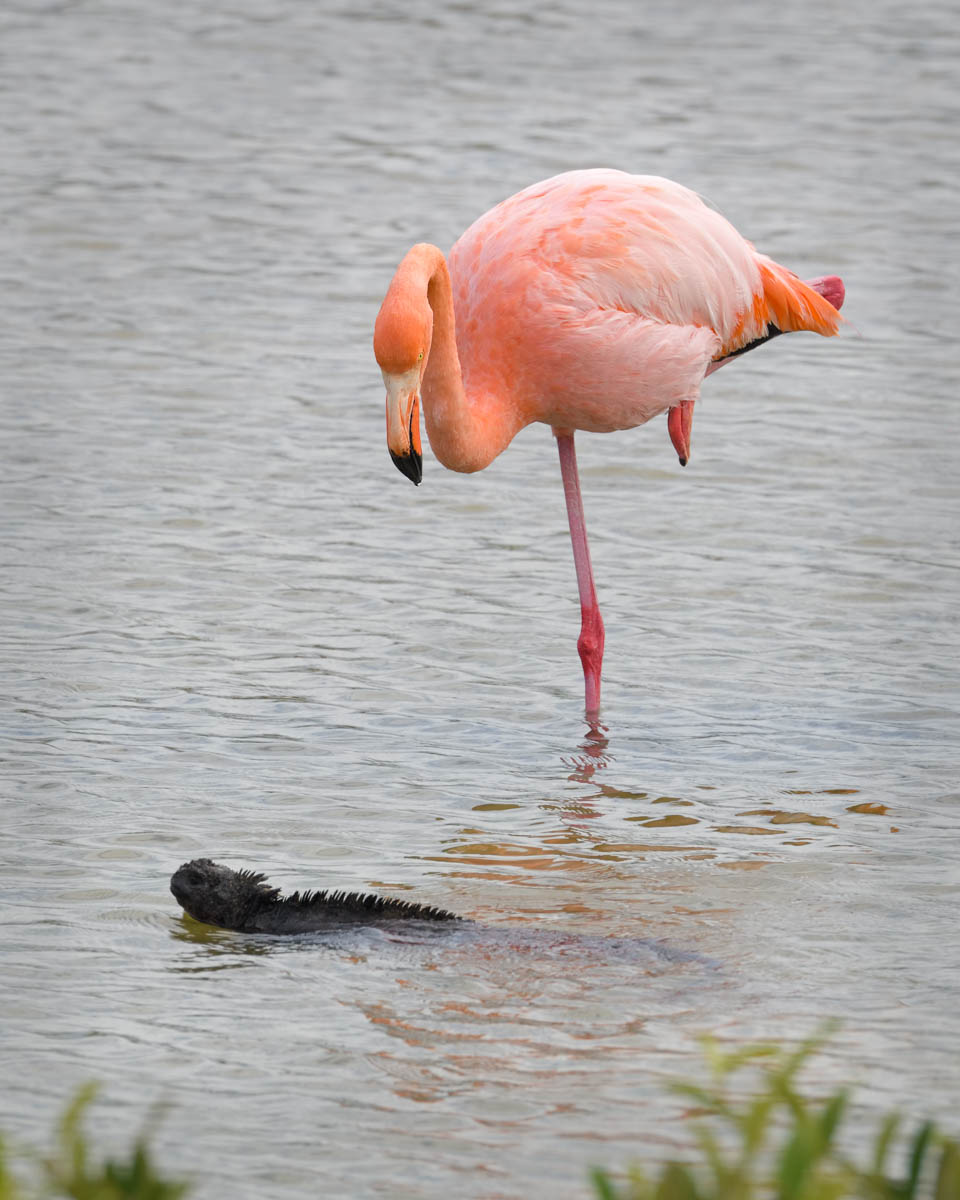
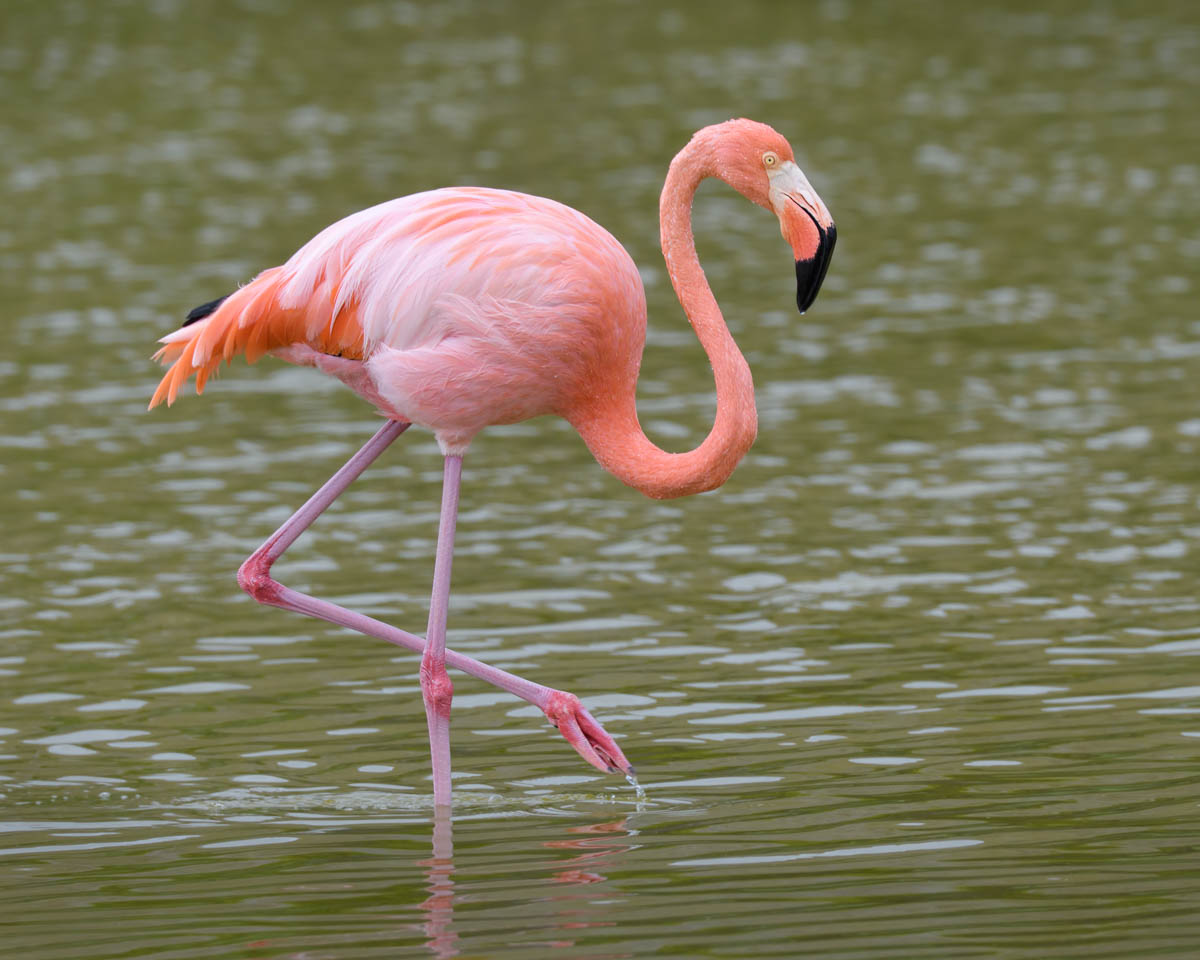
- Flamingos: wading in the shallow lagoons and shoreline pools
- Common gallinules: moving through the mangroves and vegetation
- Pintail ducks: resting and feeding on the water
- Green sea turtles: surfacing in the tide pools
- White-tipped reef sharks: cruising the shallow pools and nearby waters
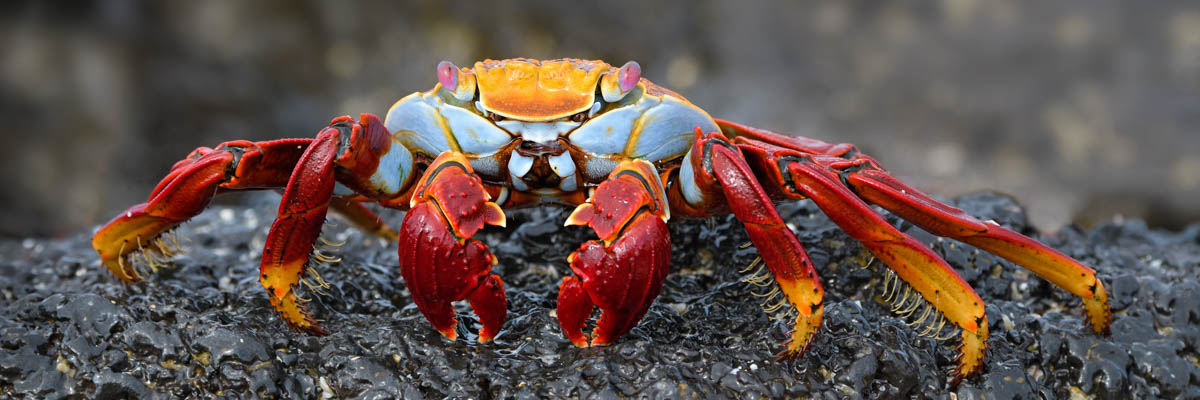
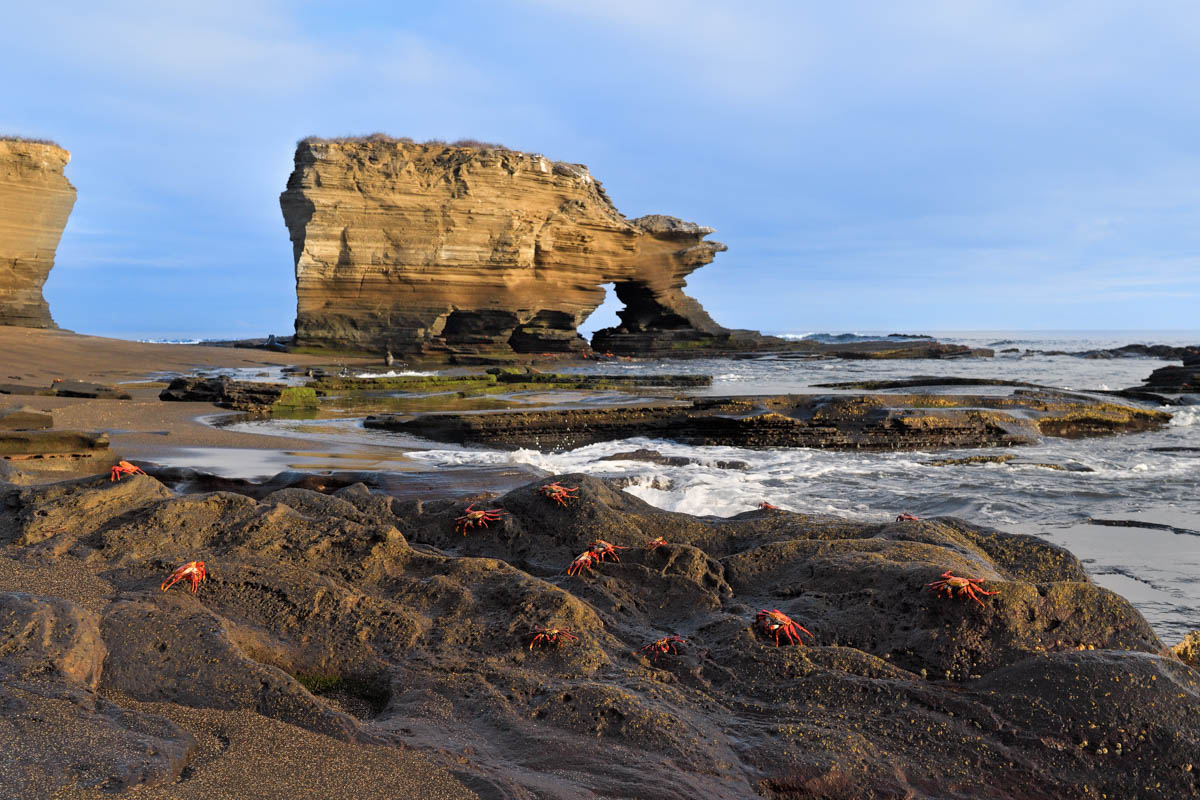
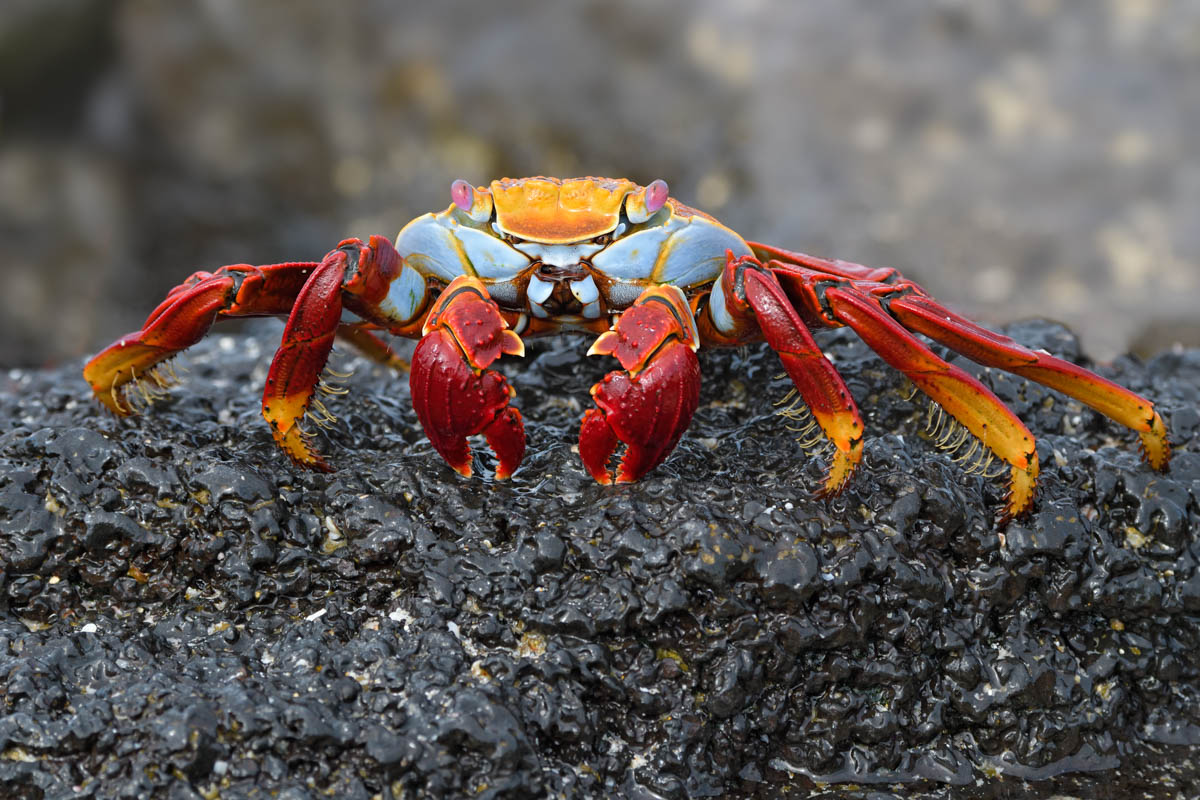
Sally Lightfoot crabs are one of the symbols of the Galapagos Islands, seen in great numbers on almost any shoreline in the archipelago. As scavengers, they’ll eat just about anything they can get their claws on, from ticks and algae to the young of other species.
Elizabeth Bay – Isabela Island
Elizabeth Bay is an inlet on Isabela’s west coast, and a dinghy ride through it reveals many small islets. Penguins and blue-footed boobies perch on the rocky outcrops. The bay’s clear water and abundant marine life make it excellent for snorkeling, with schools of colorful fish, sea lions, and perhaps even a shark or two. The bay is also known for its mangrove forest, which is unique in the Galápagos.
Highlights:
- Galápagos penguins: on the rocky islets
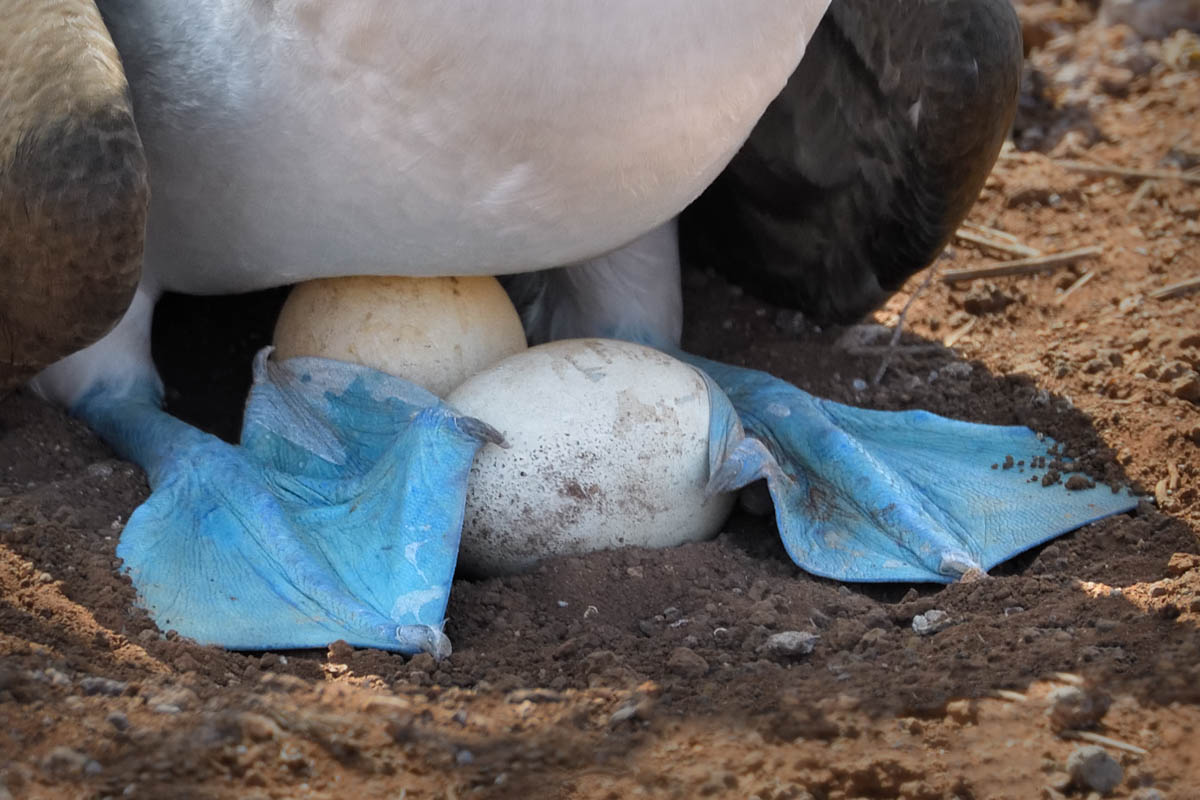
- Blue-footed boobies: perched on the islets and diving for fish
- Sea turtles: gliding through the clear water
- Rays: resting on the sandy bottom or gliding past
- Herons: wading along the mangrove edges
- Sea lions: playing and swimming around the islets
- Colorful reef fish: in schools while snorkeling
- Sharks: possible in the deeper water
- Mangrove forest (unique in the Galápagos)

Day 6 – January 23rd, 2028
Espinoza Point – Fernandina Island
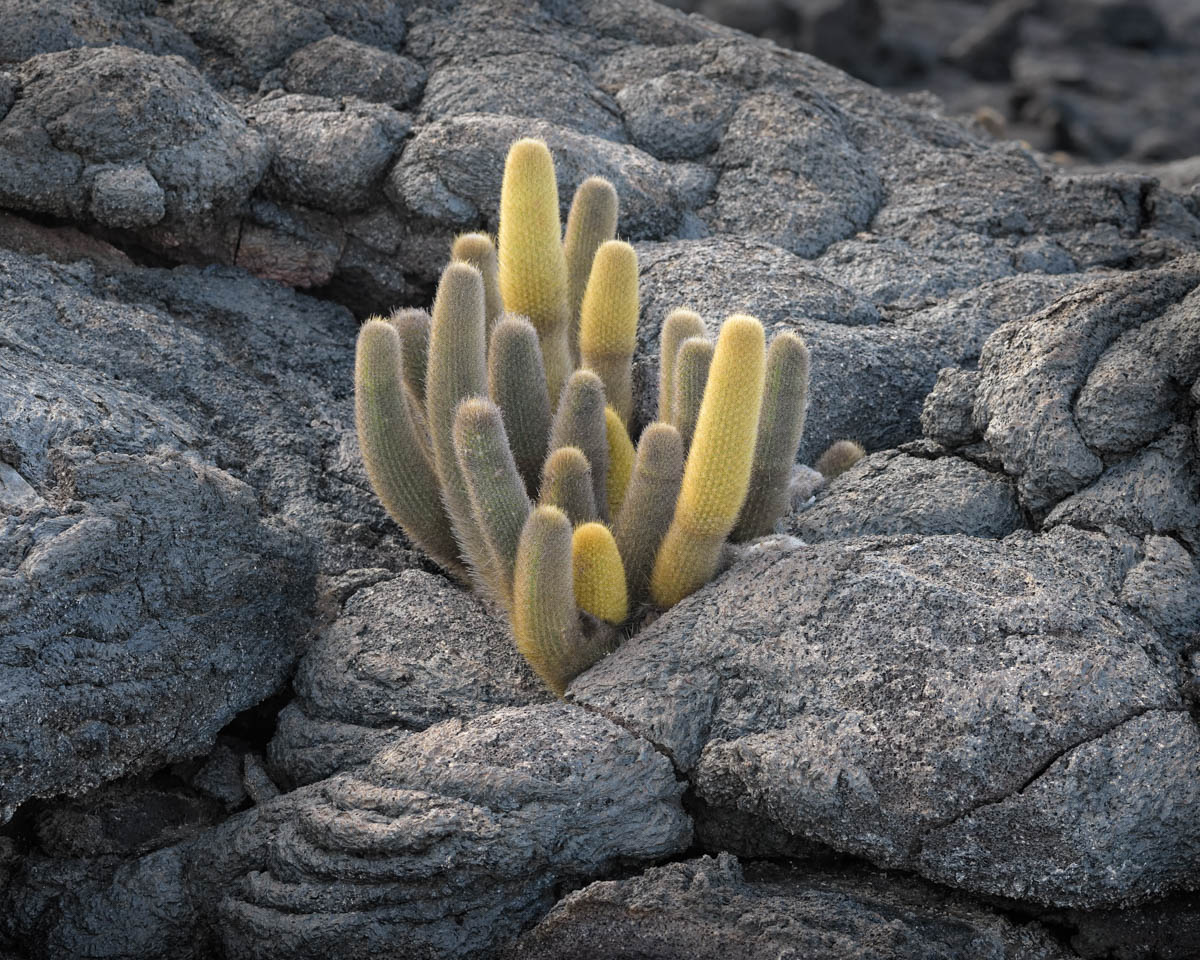
No foreign species have ever invaded Fernandina Island, which makes it one of the most pristine island ecosystems in the world. La Cumbre, the island’s active volcano, dominates the landscape, with lava fields reaching down to the ocean. The rugged black lava, including rough ‘a’a flows, is striking up close.
Espinoza Point is best known as a nesting site for flightless cormorants, and it’s also a great place to see Galápagos hawks.
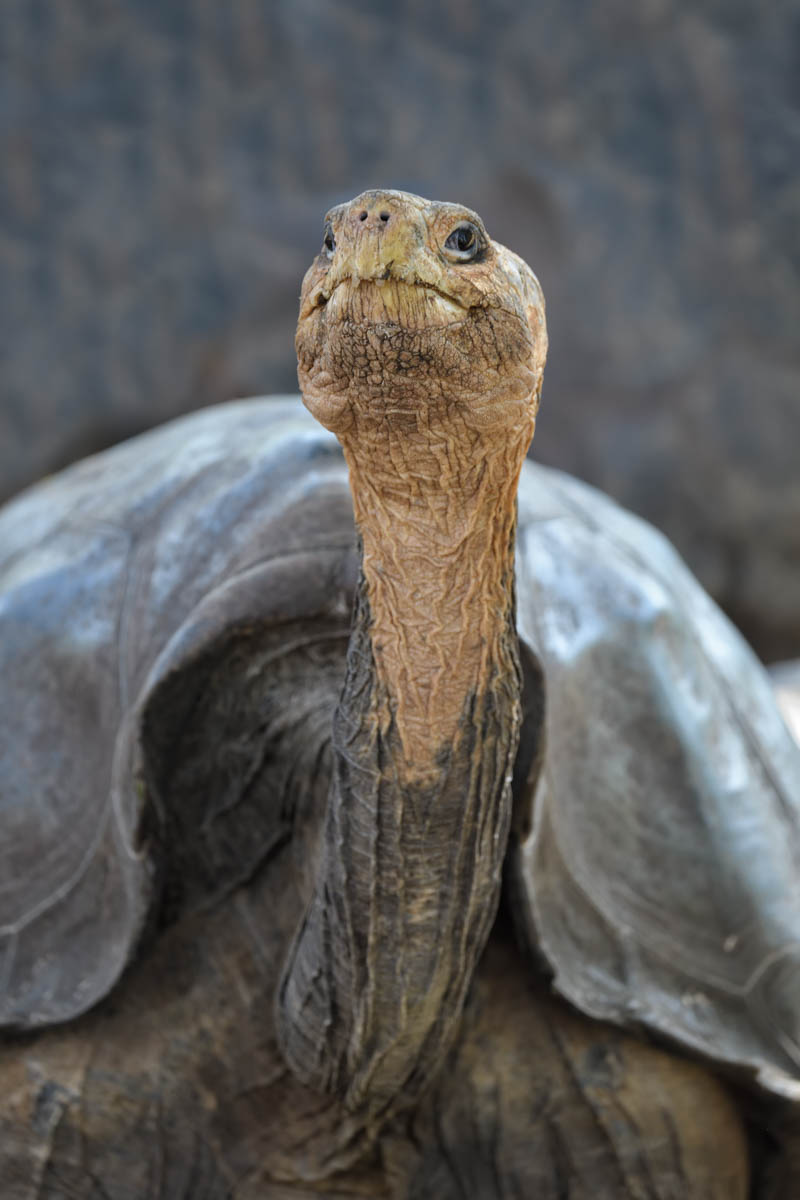
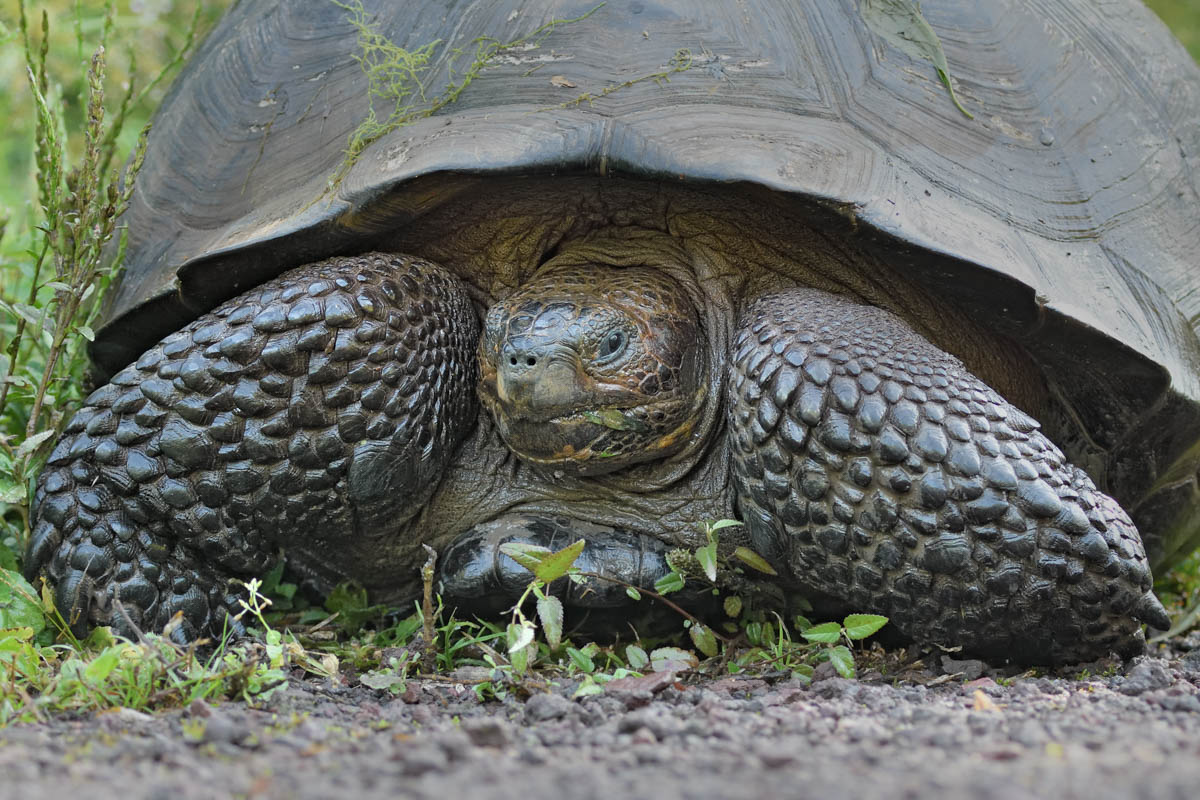
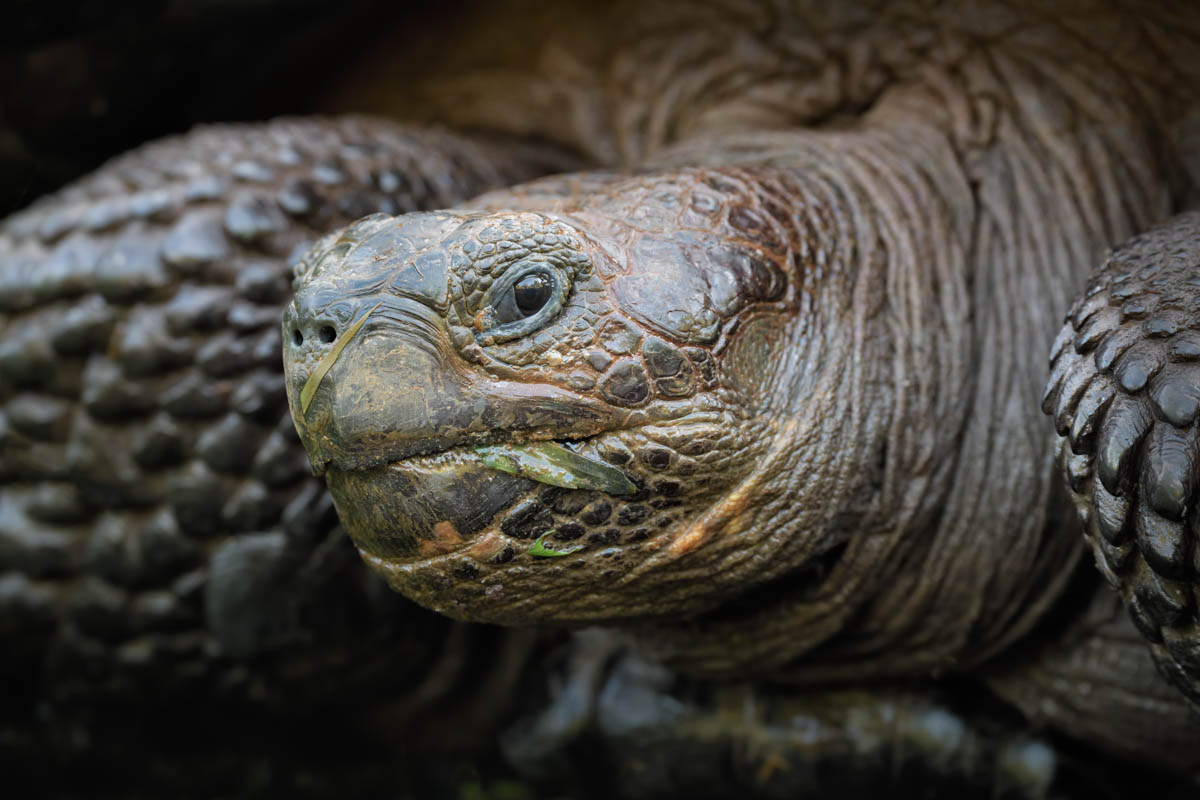
Close-up on a venerable Galápagos tortoise. This one’s ability to raise its head high is more than just a good photo pose — it also gives us a clue about its habitat.
Highlights:
- Flightless cormorants: nesting along the shore, the only cormorant that cannot fly
- Galápagos hawks: hunting or perched on the lava
- Marine iguanas: basking on the dark rocks and gathering along the shoreline
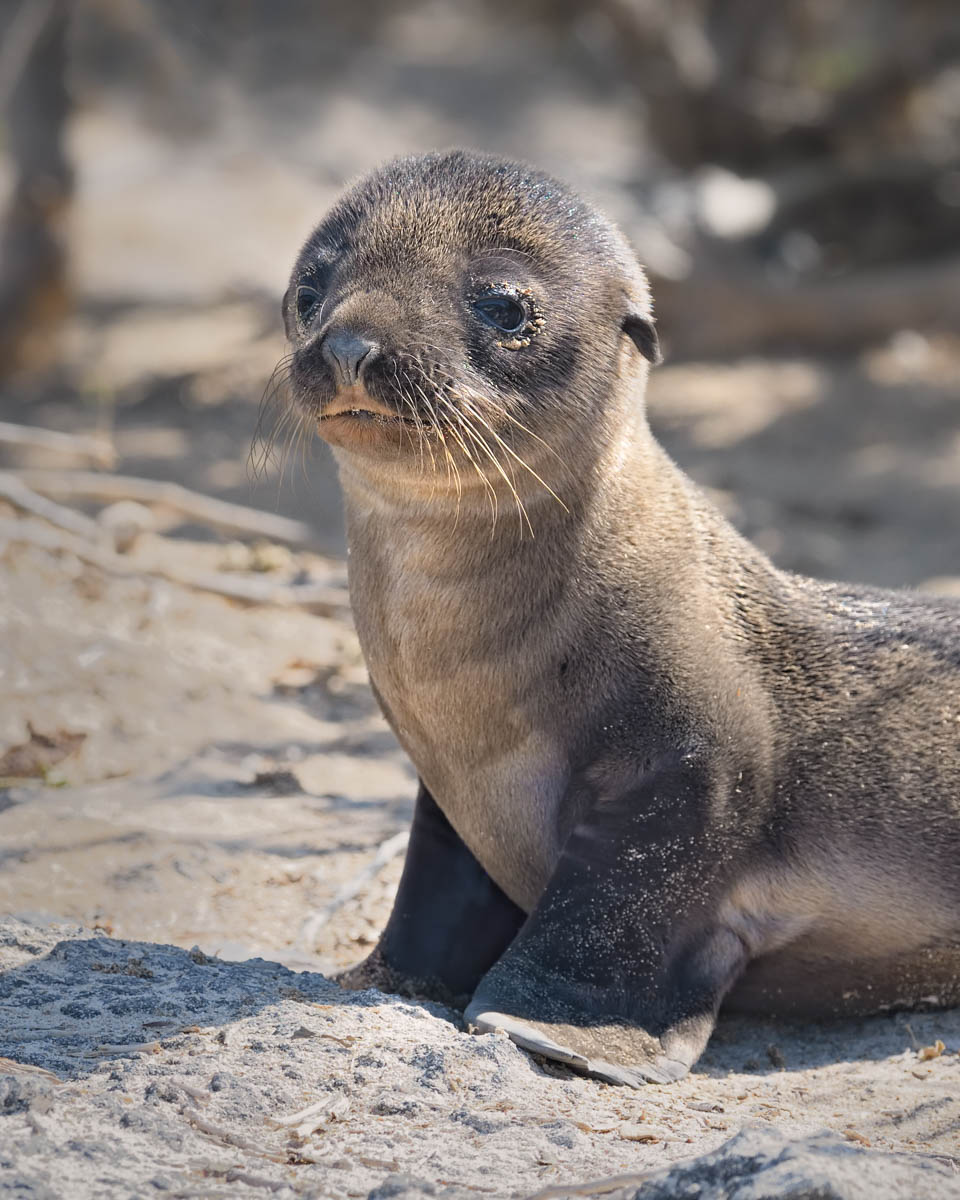
- Sea lions: resting on the rocks and in the surf
- Penguins: spotted in the coastal waters
- Active volcano La Cumbre
Tagus Cove – Isabela Island
Tagus Cove sits across from Fernandina Island, near the Bolívar Channel that separates the two. Ships have anchored here since the 1800s, and the cove’s history is still visible in the old inscriptions carved into the nearby rocks. A trail winds past Lake Darwin and climbs to a ridge with wonderful views, including of Darwin Volcano. Just north of the cove, Punta Tortuga is another lovely beach, framed by mangroves.
Highlights:
- Penguins: fishing in the cove’s cool, nutrient-rich waters
- Flightless cormorants: drying their wings on the rocks
- Galápagos hawks: patrolling the shoreline and trail
- Marine iguanas: basking on the dark lava rock
- Sea lions: resting on the beaches and rocks
- Views of Darwin Volcano and Lake Darwin

Day 7 – January 24th, 2028
Espumilla Beach – Santiago Island
Espumilla Beach is a favorite spot for marine iguanas and Sally Lightfoot crabs, whose bright red shells stand out against the dark lava rock. The crabs draw in hunting herons, so you can watch predator and prey play out along the shoreline. The waters are full of marine life, including octopuses, moray eels, and sharks, which makes snorkeling here highly recommended.
Highlights:
- Marine iguanas: basking on the rocks and grazing along the shore
- Sally Lightfoot crabs: scuttling across the lava rock
- Herons: hunting along the water’s edge
- Octopuses: hiding among the rocks and reef
- Moray eels: peeking out from crevices while snorkeling
- Sharks: cruising the deeper water offshore
- Snorkeling, with marine iguanas, Sally Lightfoot crabs, octopuses, moray eels, and sharks
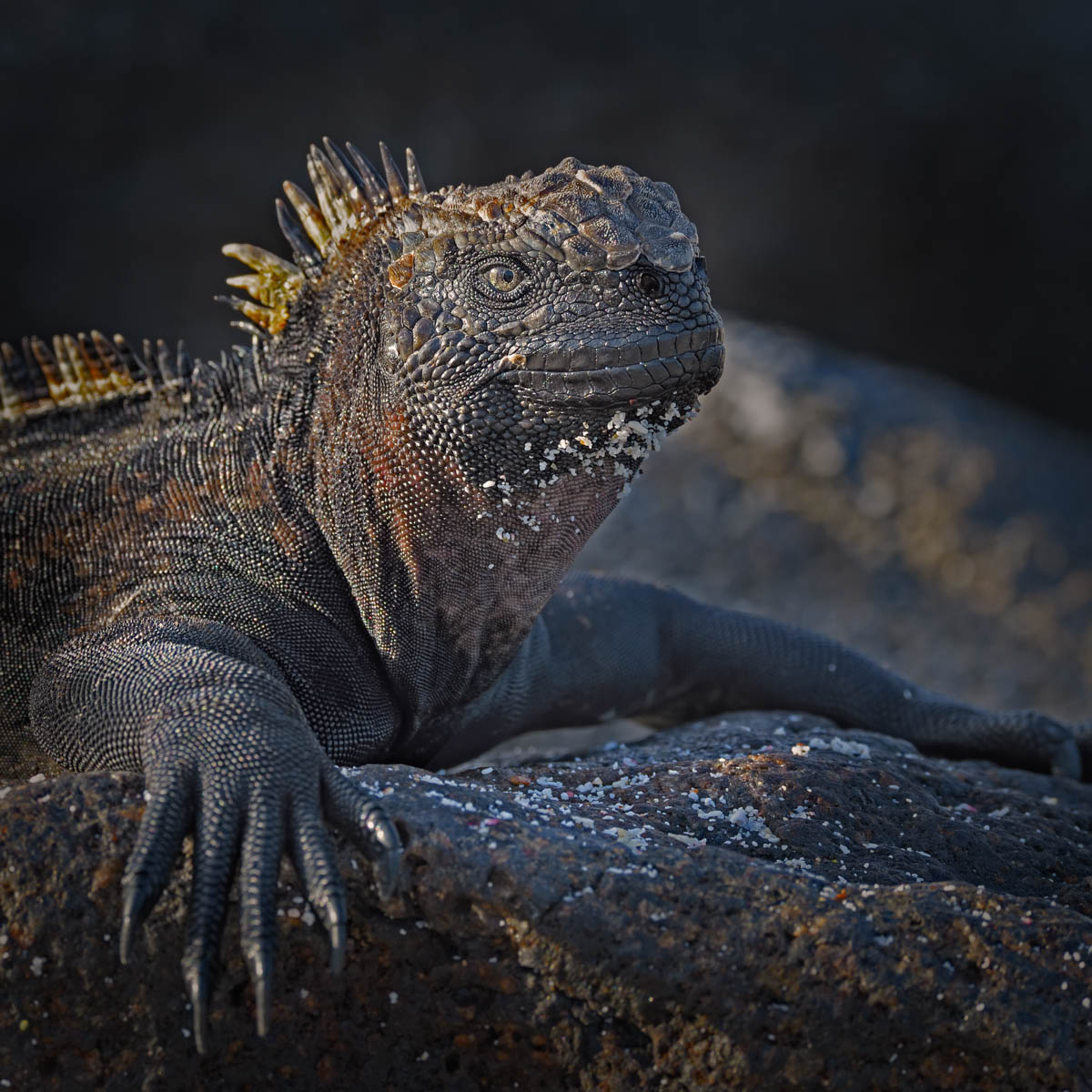
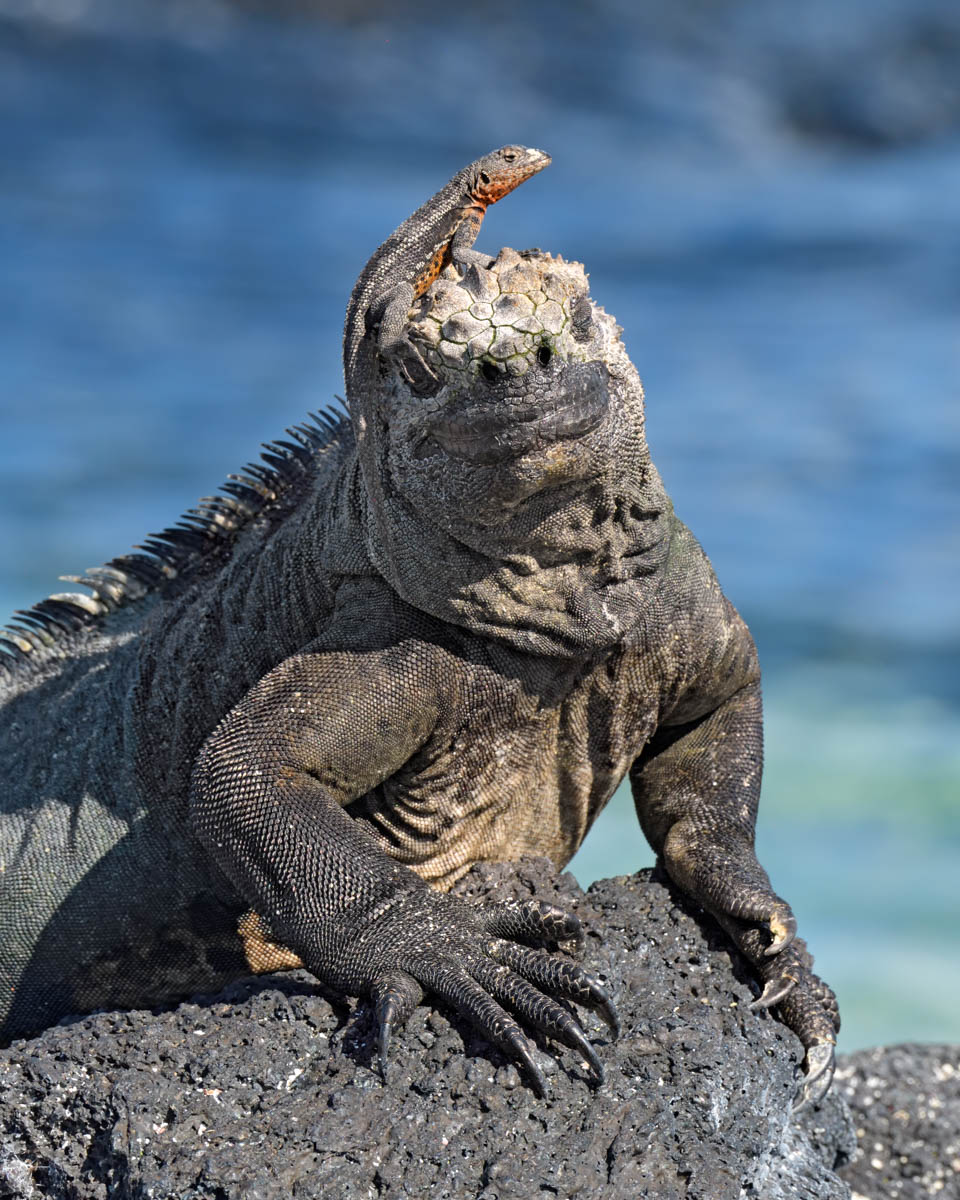
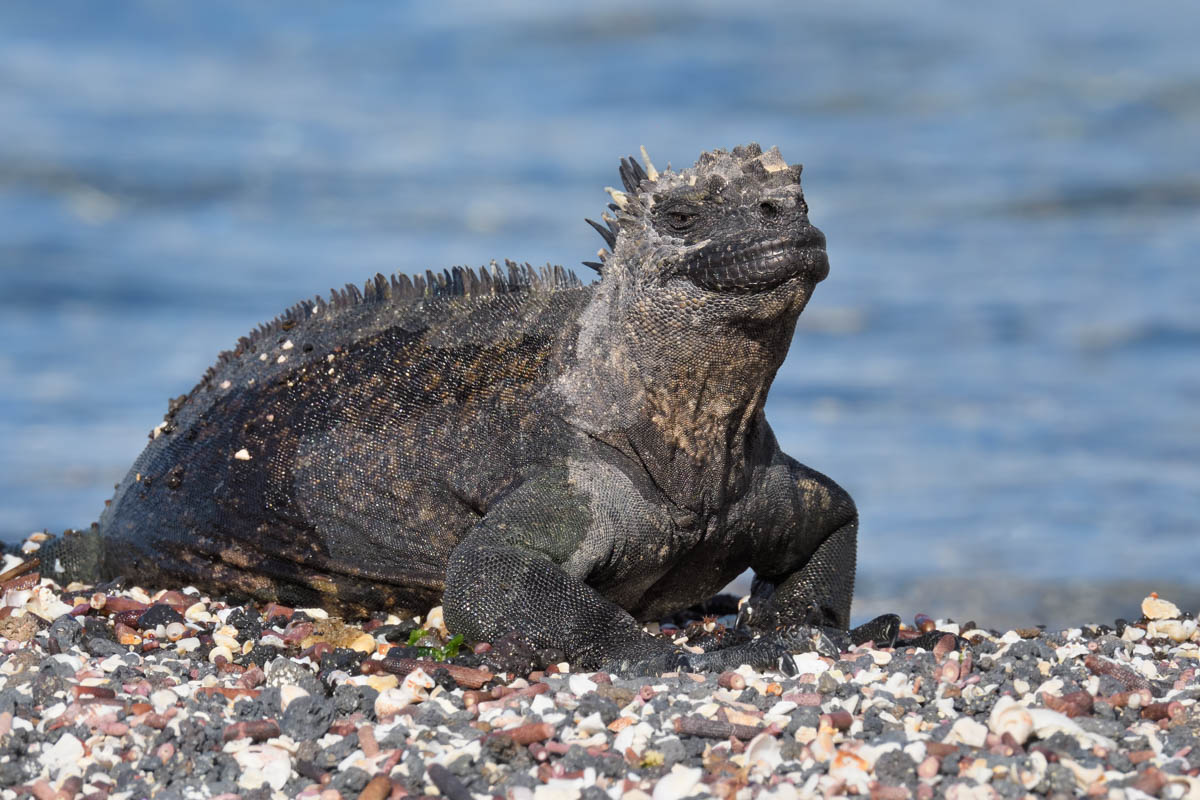
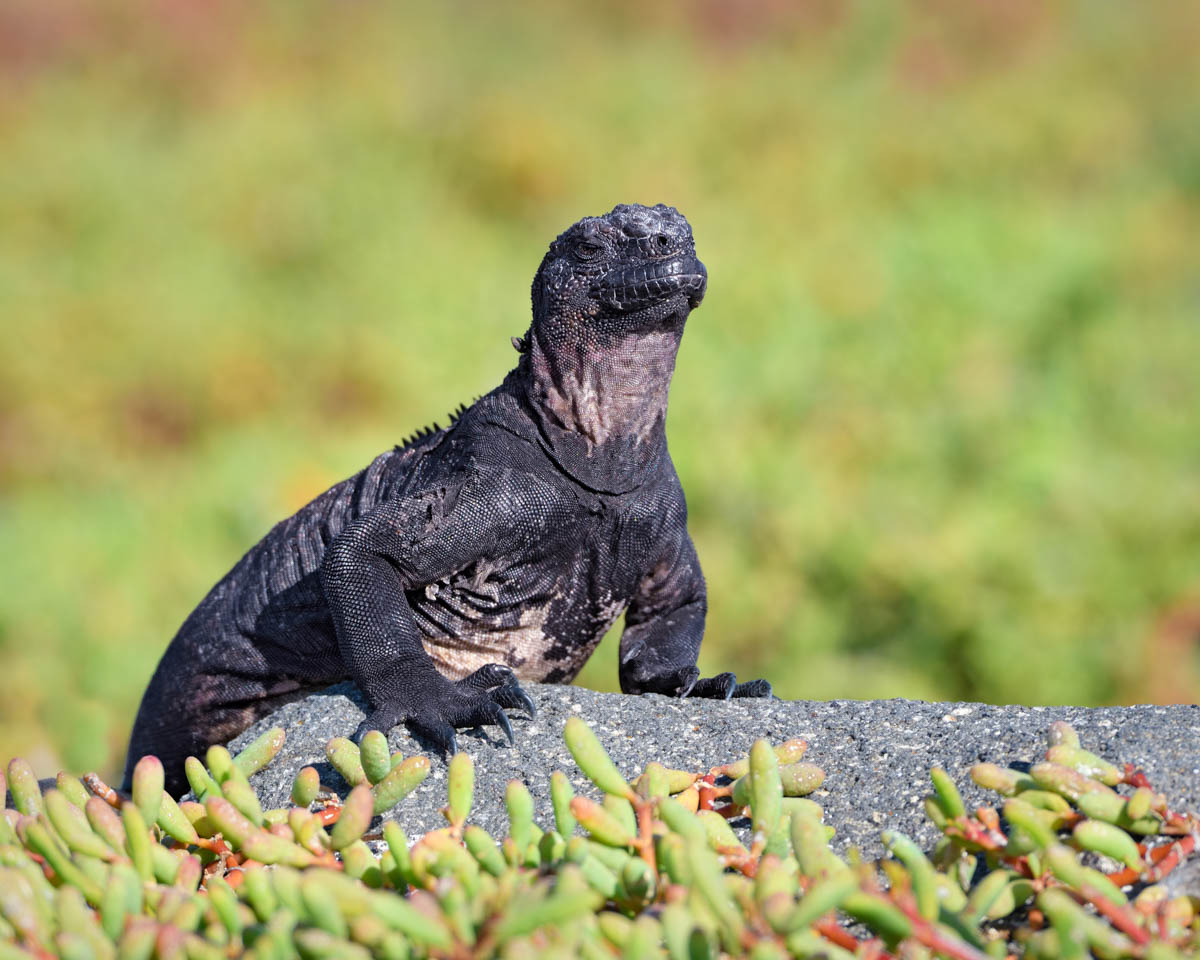
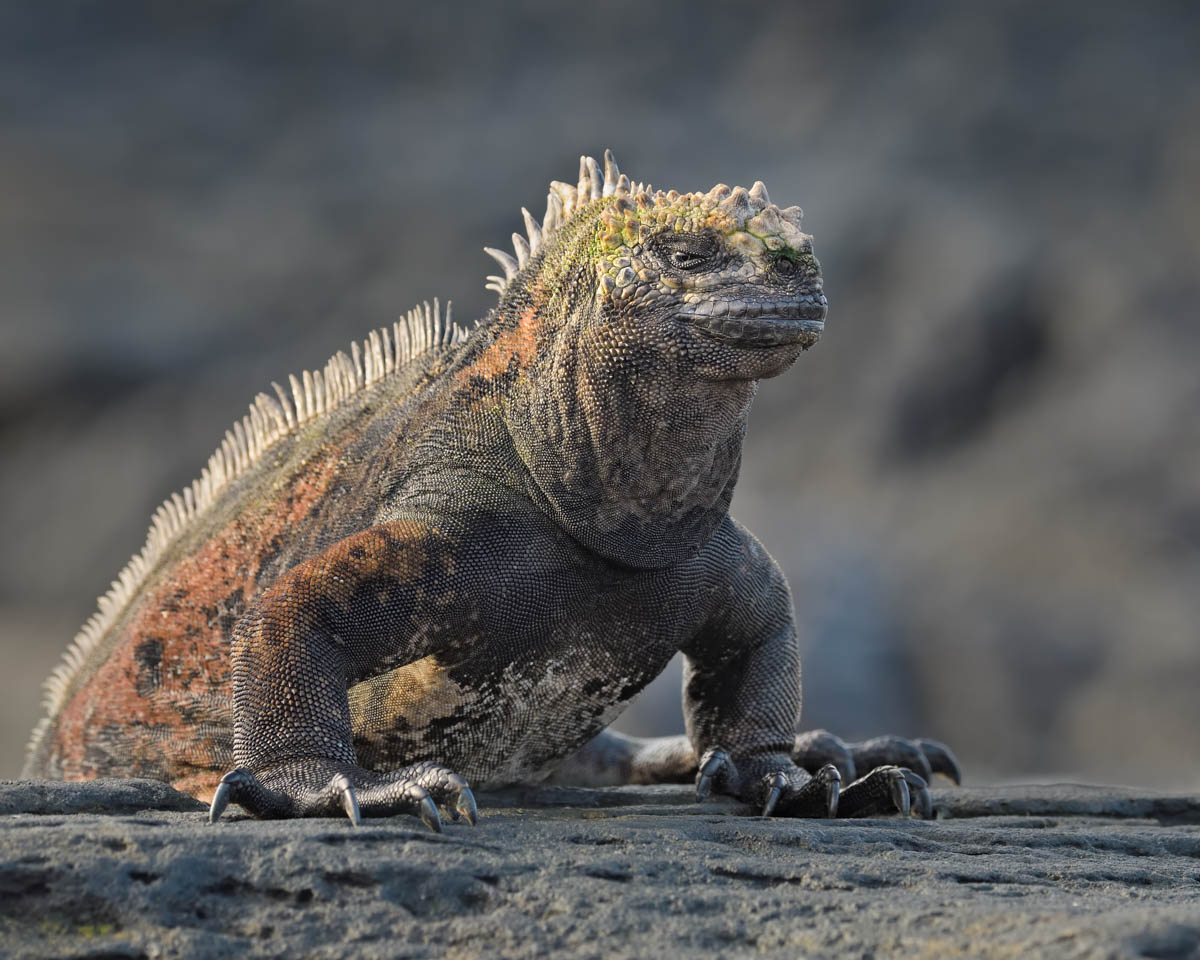
Marine iguanas are herbivores. They’re adapted to swim through salty water and feed on algae. Special glands filter the salt out of their bloodstreams and secrete it above their noses.
Egas Port – Santiago Island
Also known as James Bay, Egas Port is home to curious Galápagos hawks and quick-footed Galápagos lava lizards. A trail leads to a rugged coastline of tide pools and grottos teeming with wildlife, where Galápagos fur sea lions bask in the sun. It’s also an excellent snorkeling site, with underwater formations to explore.
Highlights:
- Galápagos hawks: watching the trail, often surprisingly close
- Galápagos lava lizards: darting across the dark lava rock
- Galápagos fur sea lions: sunbathing and bathing in the tide pools
- Galápagos sea lions: resting along the shore
- Marine iguanas: gathering on the rocks
- Oystercatchers: probing the tide pools for food
- Darwin’s finches: flitting through the vegetation
- Tide pools and grottos
- While snorkeling, White-tipped reef sharks, Sea turtles, Rays, Striking underwater formations
Day 8 – January 25th, 2028
Lobos Island – San Cristóbal Island
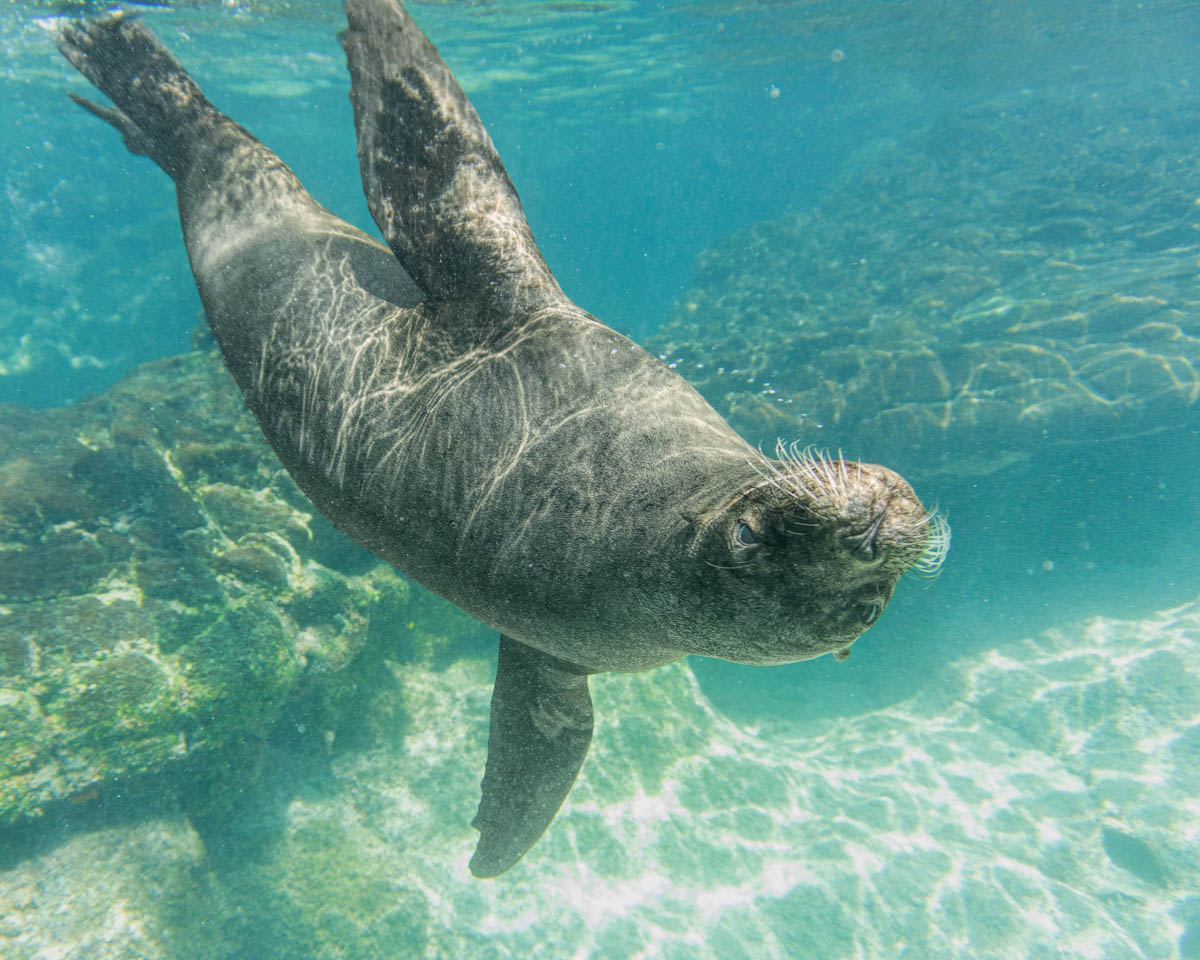
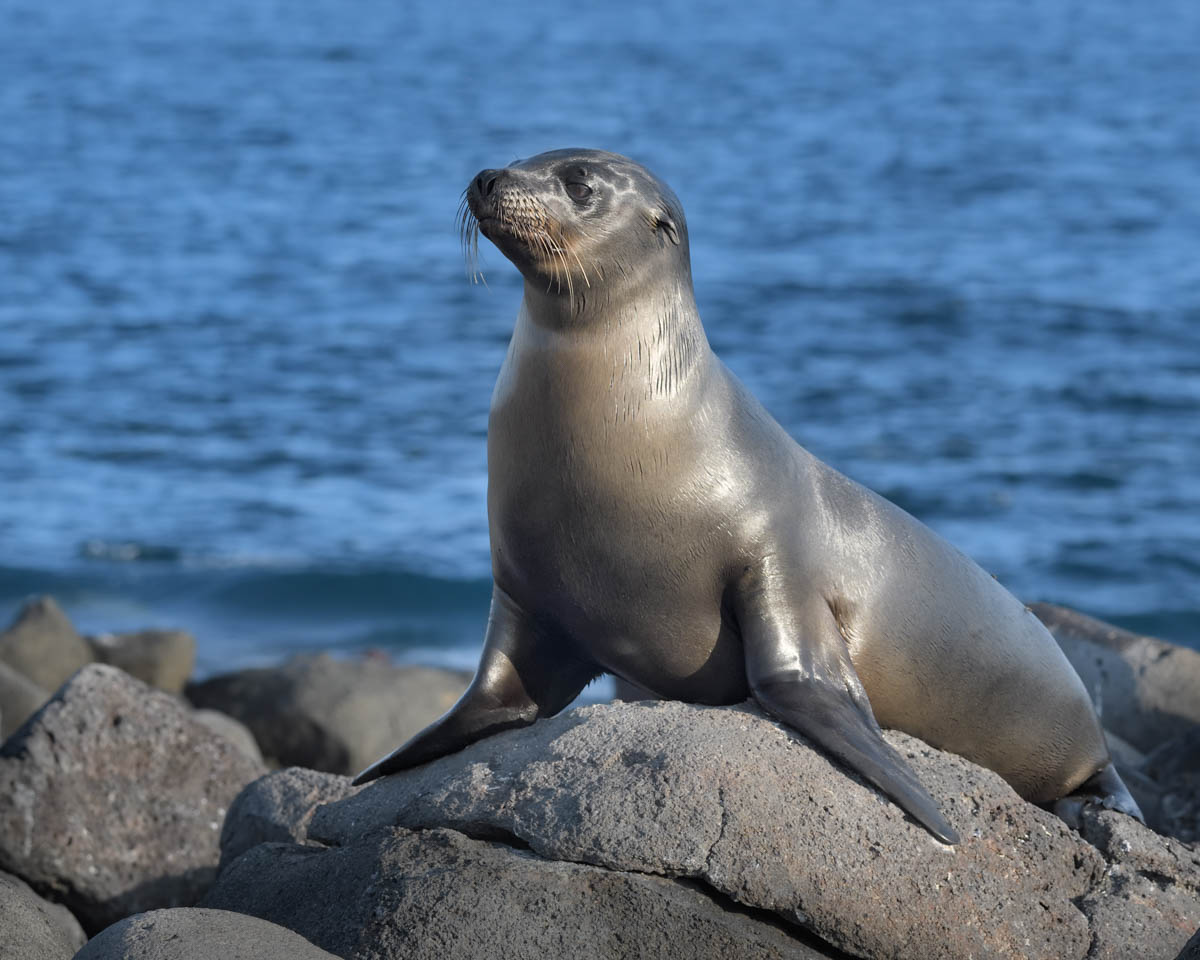
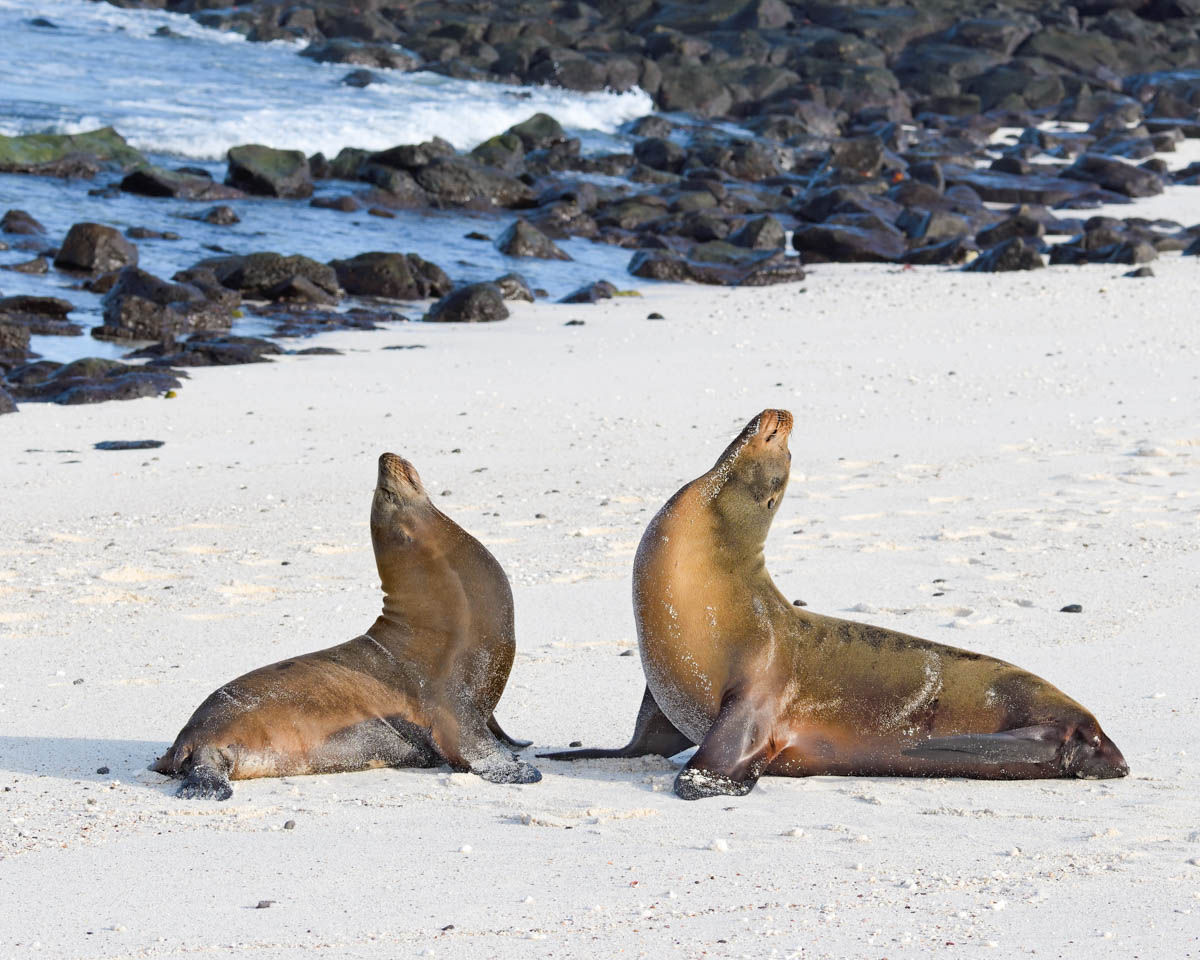
Lobos Island takes its name from the sea lions that call it home, and they’re as lively as the name suggests. Noisy and playful, they’ll welcome you to their shore. The island is also a great snorkeling spot, where you can swim alongside the sea lions, and it’s one of the best places to see seabirds, including blue-footed and Nazca boobies.
Highlights:
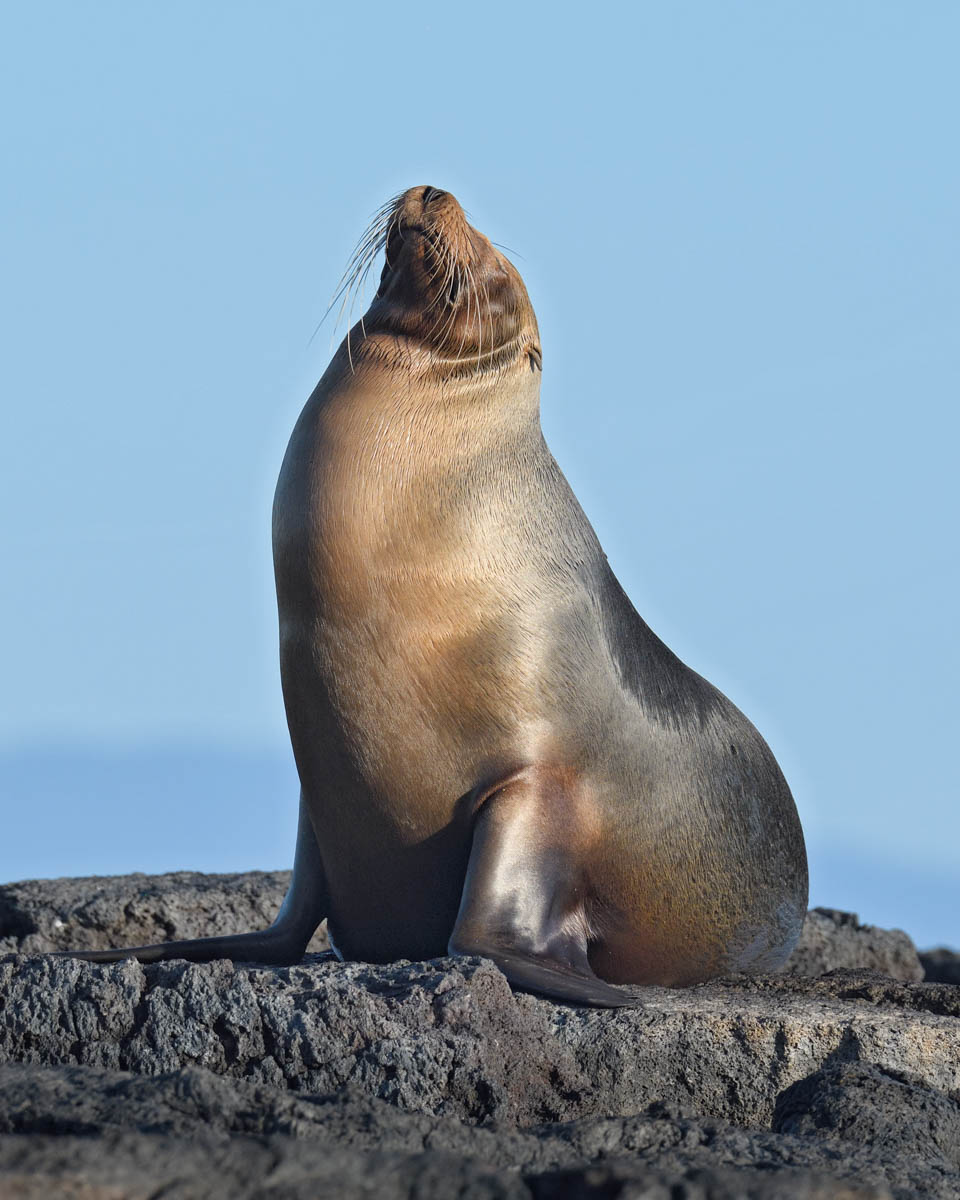
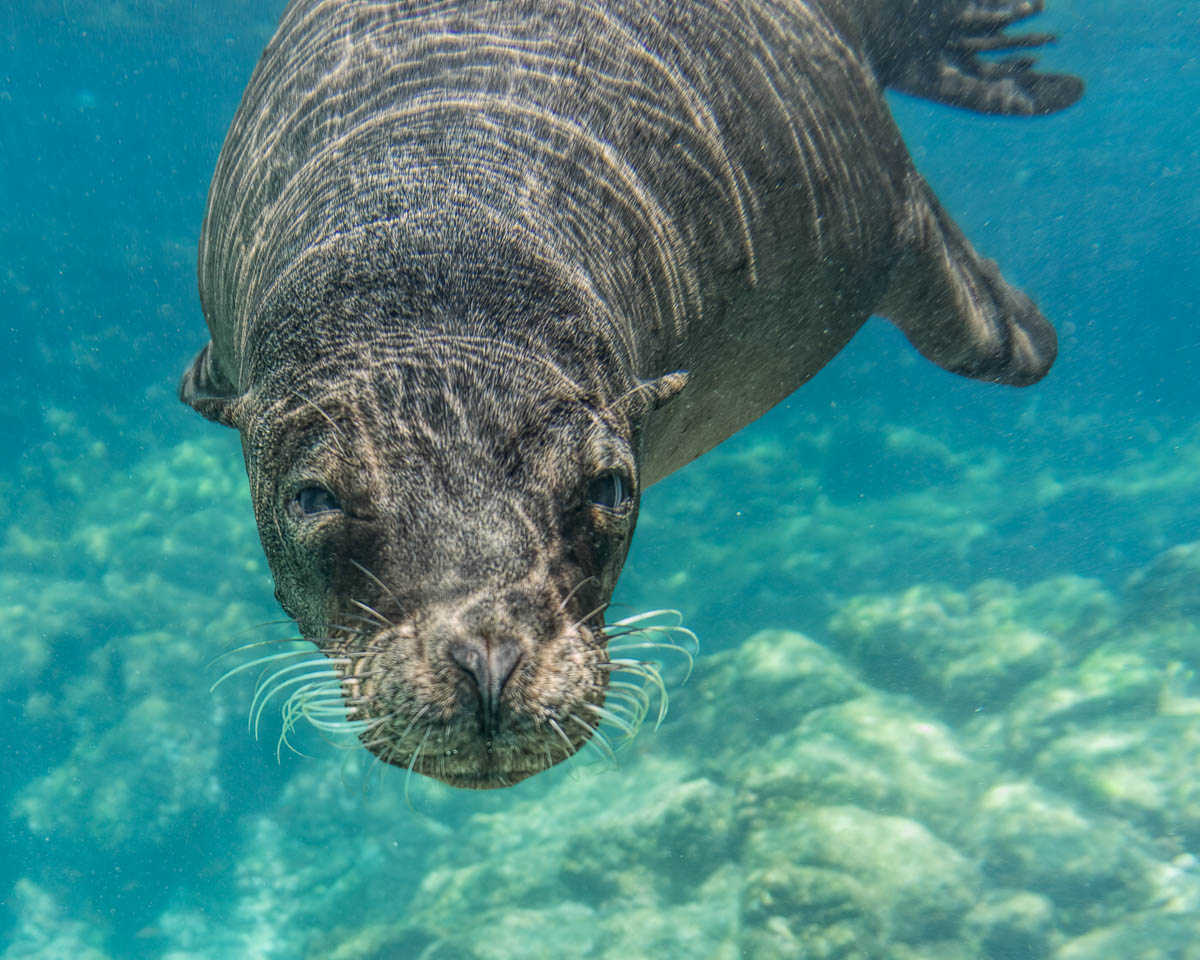
- Sea lions: playing, swimming, and lounging on the rocks, sometimes right alongside snorkelers
- Blue-footed boobies: diving for fish and displaying their bright feet
- Nazca boobies: nesting and resting on the island
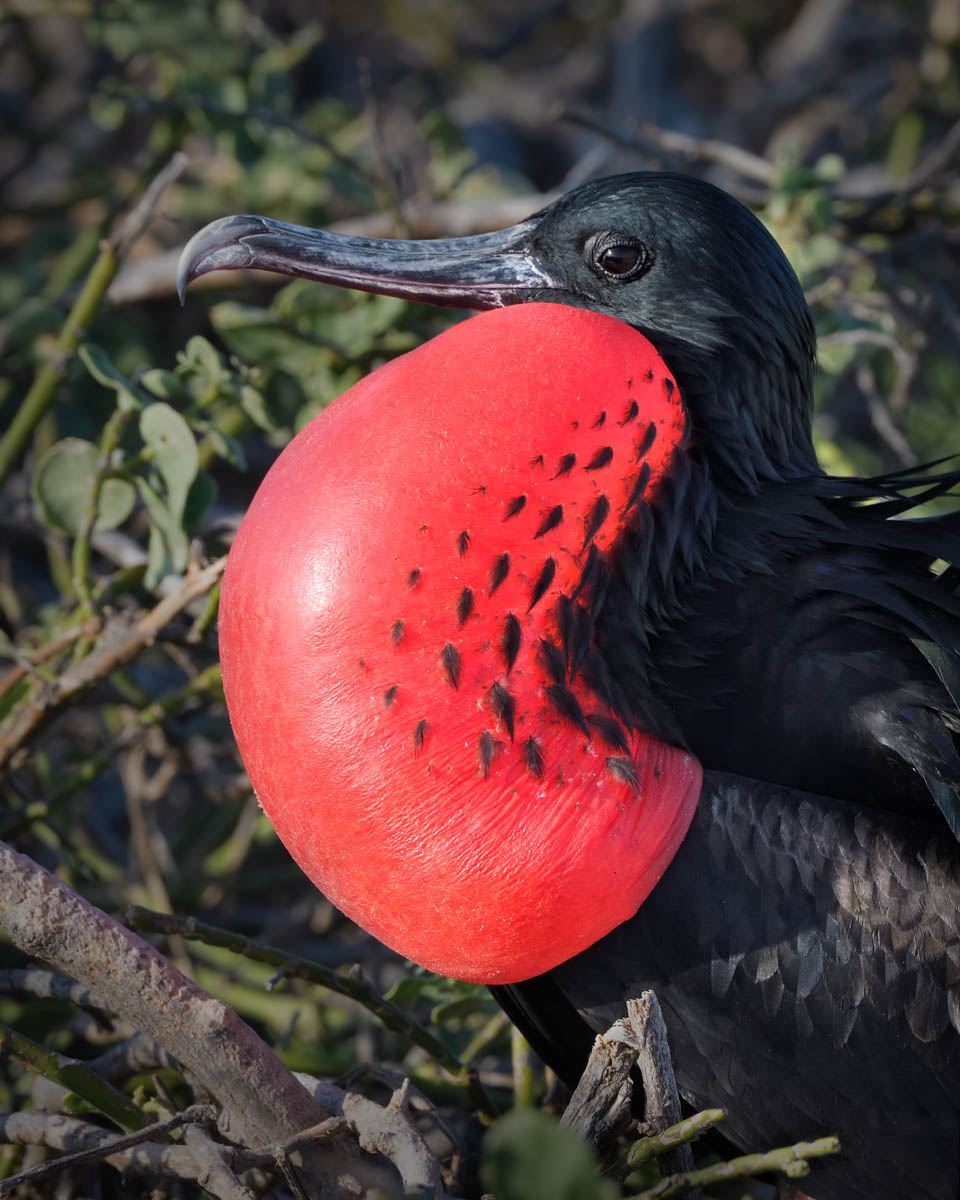
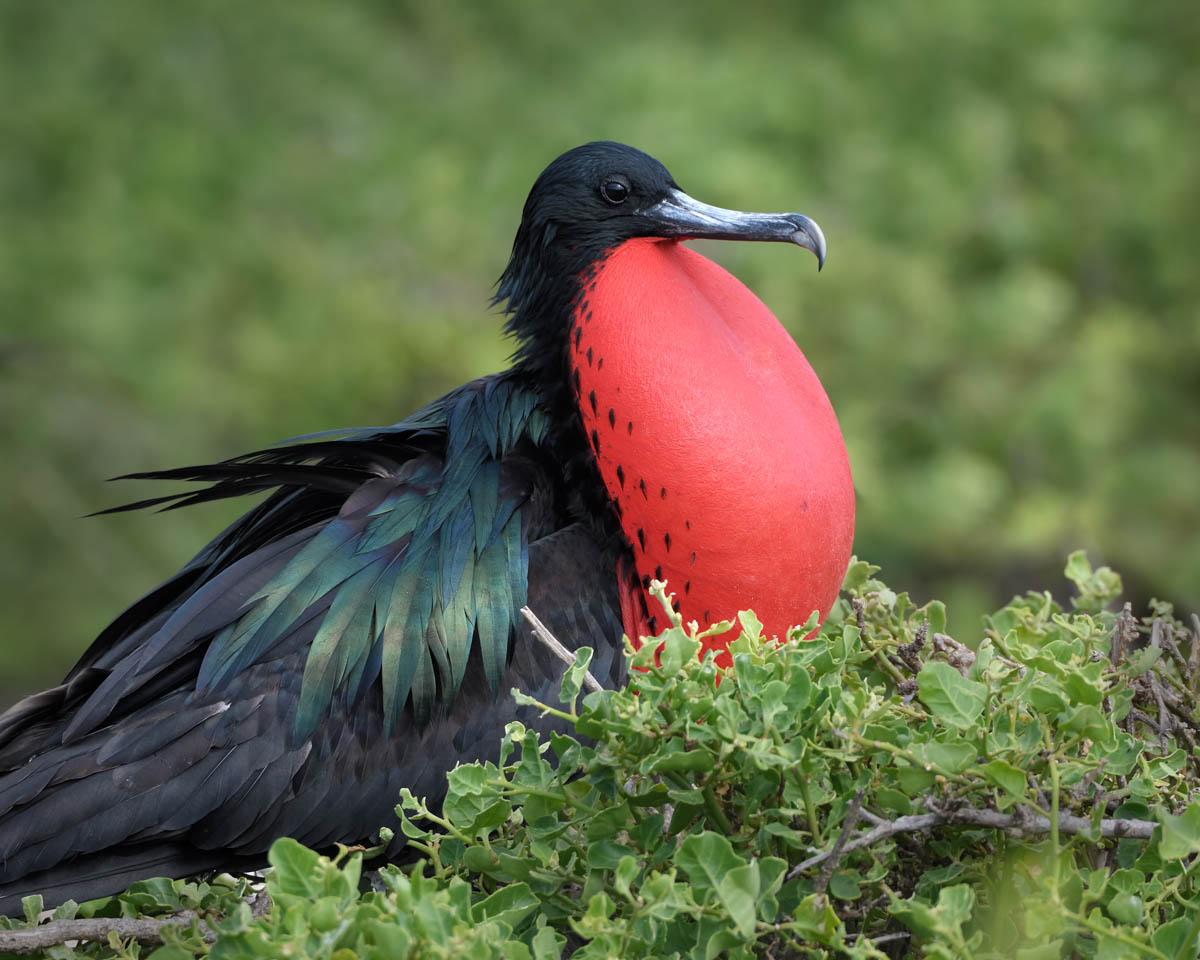
- Frigatebirds: gliding overhead on long, angular wings
- Snorkeling with sea lions
Farewell to the Yacht and Transfer to Santa Cruz
After cruising the Galápagos on the luxury yacht, we’ll say goodbye to the crew and board a boat transfer from San Cristóbal Island to Santa Cruz Island. Our focus now shifts to the eclipse. Once we arrive, we’ll check in at our beachfront hotel in Puerto Ayora.
Tonight, it’s time to prepare. Go through your camera gear, check batteries and memory cards, and set out your eclipse glasses. Tomorrow is the day. The eclipse begins at dawn, so we’ll start early.
Day 9 – January 26th, 2028 – ECLIPSE DAY
Here is the day we have all been waiting for………..ECLIPSE DAY!
Get all your gear ready, cheat sheets out, and lets do this !!! Don’t forget those solar glasses (provided) !!!!
This morning the moon passes directly between Earth and the sun, but it sits a little farther from Earth in its orbit, so it looks slightly smaller than the sun. It can’t cover the whole disk, and what’s left is a bright ring of sunlight around the moon’s dark silhouette. That’s the “Ring of Fire.”
The moon starts taking a bite out of the sun, and over the following hour the sun narrows into a crescent. Sunlight through leaves creates crescent-shaped spots on the ground, because each gap between leaves works like a pinhole camera. You may notice the light getting strange: dimmer, cooler, and somehow flatter.
When the ring forms, the sky doesn’t go dark. It stays bright, with a deep blue-gray tone, and you can still see clearly around you. The ring itself is blinding, so you can’t look at it directly without proper solar eclipse glasses. Many people describe the moment as spectacular. Animals may react: birds sometimes go quiet or head back to roost, and crickets may start chirping as if evening has arrived.
Because the ring is visible for only a few minutes, most of the emotional payoff comes from watching the moon slide across the sun and seeing the light change around you.
| Category | Time |
|---|---|
| Eclipse Duration | 2 hours, 52 minutes and 23 seconds |
| Duration of Ring of Fire | 5 minutes and 44 seconds |
| Partial Eclipse begins (Contact 1) | 06:07:39 AM |
| Full Eclipse begins (Contact 2) | 07:21:54 AM |
| Maximum Eclipse | 07:24:46 AM |
| Full Eclipse ends (Contact 3) | 07:27:38 AM |
| Partial Eclipse ends (Contact 4) | 09:00:01 AM |
After the Ring of Fire: Your Day Is Yours
Once the eclipse ends, the celebration begins. Swap stories with fellow travelers, relive those unforgettable minutes, and let the wonder of the morning sink in. Then choose how you want to spend the rest of your day in Puerto Ayora:
- Unwind at your beachfront hotel, with the sound of the waves and a drink in hand.
- Explore the town, wander its streets, and find handcrafted treasures and local flavors.
- Take a walk to Tortuga Bay, one of the most beautiful beaches in the Galápagos, with its soft sand and crystal-clear water.
Whichever you choose, the day is yours. Call it the perfect ending to an extraordinary eclipse.
Day 10 – January 27th, 2028
Final Day: Breakfast and Farewell to the Islands
Our last morning in the Galápagos begins with a relaxed breakfast, a perfect moment to reflect on the past days and share your favorite memories with fellow travelers. Once you’re ready, we’ll arrange your transfer to Baltra Airport for your flights back to Quito.
TOUR PRICE INCLUDES
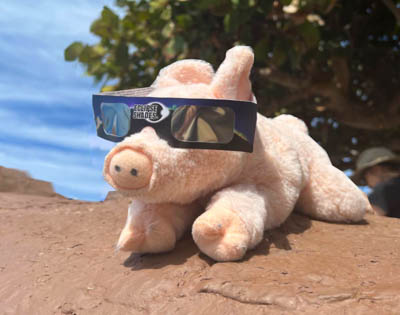
Come join Bacon, the famous solar eclipse chasing pig.
- 10 days / 9 nights lodging – Double occupancy
- 2 days/nights in Quito (Historic and Equator tour)
- 6 day Galapagos cruise on a Luxury Yacht
- 2 days at a Galapagos beachfront hotel in a prime location for the eclipse
- All meals are provided during the workshop. Expect to gain a couple of pounds on the trip
- Round-trip airfare from Quito to the Galápagos Islands
- Ground transportation to and from the Quito airport
- Ground transfers in the Galápagos Islands
- All shore excursions with an English-speaking Galápagos naturalist guide
- Snorkeling equipment: mask, tube, and fins from size 34 – 45 (Optional)
- Ecuador Transit Control Card
- Small group. Only 14 spots with two instructors
- Instruction in the field with your photographer guides
- Planning Package including recommendation on the proper camera gear and clothing
- Prior to embarking on your journey, we are happy to provide a free phone consultation with your trip leader, who will give you guidance on what equipment to bring, answer questions about the locale, and give general photography advice to make sure you are ready to capture your dream images.
- We take care of all the trip logistics once you arrive Quito. The only thing you should concentrate on is having a fantastic time and capturing stunning images of an Annular Eclipse and the Galápagos Islands.
NOT INCLUDED
- Air Transportation to Quito, Ecuador from your home base and back
- Alcoholic drinks/Bottled beverages
- Personal items
- Wet suits (Shorty wet suits in all sizes will be available to rent on board)
- Gratuities for yacht crew and local naturalist
- Galápagos National Park entrance fee
- Travel/Cancellation/Emergency evacuation insurance
Over 90% of Our Clients Are Repeat Customers
Clients rate us five out of five stars on Google.

Matt’s man cave in Colorado
TRIP LEADERS
Matt Shetzer
Meet Matt, Your Eclipse Guide and Sky Photographer. For the last 15 years, Matt has been photographing the skies, and his passion has only grown with time. He chases solar and lunar eclipses wherever they lead, and he loves the outdoors that make every journey worthwhile.
When the sun goes down, Matt heads to his observatory, where his telescopes turn toward distant galaxies, nebulae, and star clusters. Each deep-sky image is the result of patient, careful work, and his enthusiasm for the night sky is contagious.
If you can’t find Matt, check the observatory. He’s probably there, with a telescope pointed at something spectacular.
To read more about Matt, click HERE.
Angela Shetzer
Hi, I’m Angela, the other half of Shetzers Photography, from the mountains of Colorado or wherever our workshops take us. I started out shooting black-and-white film, which taught me patience and a deep respect for the photo you almost missed, and I still love converting digital shots to black and white.
These days I shoot with a Sony and Nikon, but I still look for the same things: everyday moments that never make the postcard, and the old buildings that have seen more than we ever will.
I’m also an eclipse chaser, so if the sky goes dark in the middle of the day, I’m probably already there. When I’m not behind the camera, you’ll find me scrapbooking, because the photos only really come alive and tell their story once they’re on a page. Bring your camera, bring your questions, and bring your sense of humor. We’ll make it a good day, I promise.
Register for the 2028 Galápagos Ring of Fire Eclipse Tour »
PHYSICAL REQUIREMENTS
You should be in good physical health. You will be walking on trails with your camera gear for about 2 hours, typically 1-2 miles per destination. While most of the trails are smooth, some are on uneven terrain such as lava rock. You will need to be able to get in and out the zodiac boats, both on the yacht and in knee-deep water when we make wet landings. There are stairs/ladders on the boat which you will need to be able to go up and down comfortably.
If you are concerned about the physical demands of this trip, please contact us, and we will be glad to discuss options to accommodate your needs.
TOUR PHOTOGRAPHY SKILL LEVEL
Whether you’ve been behind the lens for decades or just picked up your first camera, this journey is for you. Our 2028 Galápagos Ring of Fire Photography Tour welcomes photographers of every level, from curious beginners to seasoned professionals. And if you don’t own a camera at all, you’re still welcome. Come for the wildlife, the volcanic landscapes, and the eclipse, and let the Galápagos do the rest.
WEATHER CONDITIONS
January is one of the best times to explore the Galápagos. Days are warm and inviting, with highs around 82°F (28°C) and cooler nights around 72°F (22°C), so you can spend your time outdoors without the heat wearing you down.
Warm, clear conditions also make January a great month. Rain is light this time of year. Showers tend to be brief and infrequent, leaving plenty of sunshine for eclipses, hiking, snorkeling, and wildlife watching.
CAMERA EQUIPMENT TO BRING
- Camera Backpack for walking around the Galapagos
- A lens around 600mm. A 1.4x Teleconverter can be nice
- A telephoto lens from 80 to 400mm
- Sturdy Tripod with Gimbaled or Ball Head
- A wide-angle lens from 24-100 for landscapes
- Solar Film (More details on that later)
- Shutter Remote / Cable release
- Lots of batteries
Come join us in the Galapagos for an amazing trip.
If you need assistance in selecting gear to meet your photography goals just let us know.
All guests will receive a detailed planning package to assist in the process prior to the trip.
NON-PHOTOGRAPHER GUESTS
The Galápagos Islands provide a spectacular experience for everyone. Whether you enjoy photography or just have a love for nature, there is something for you in the Galápagos Islands.
Non-photographers are welcome on the tour, and are free to join us on all activities.
CANCELLATIONS/TRIP INSURANCE
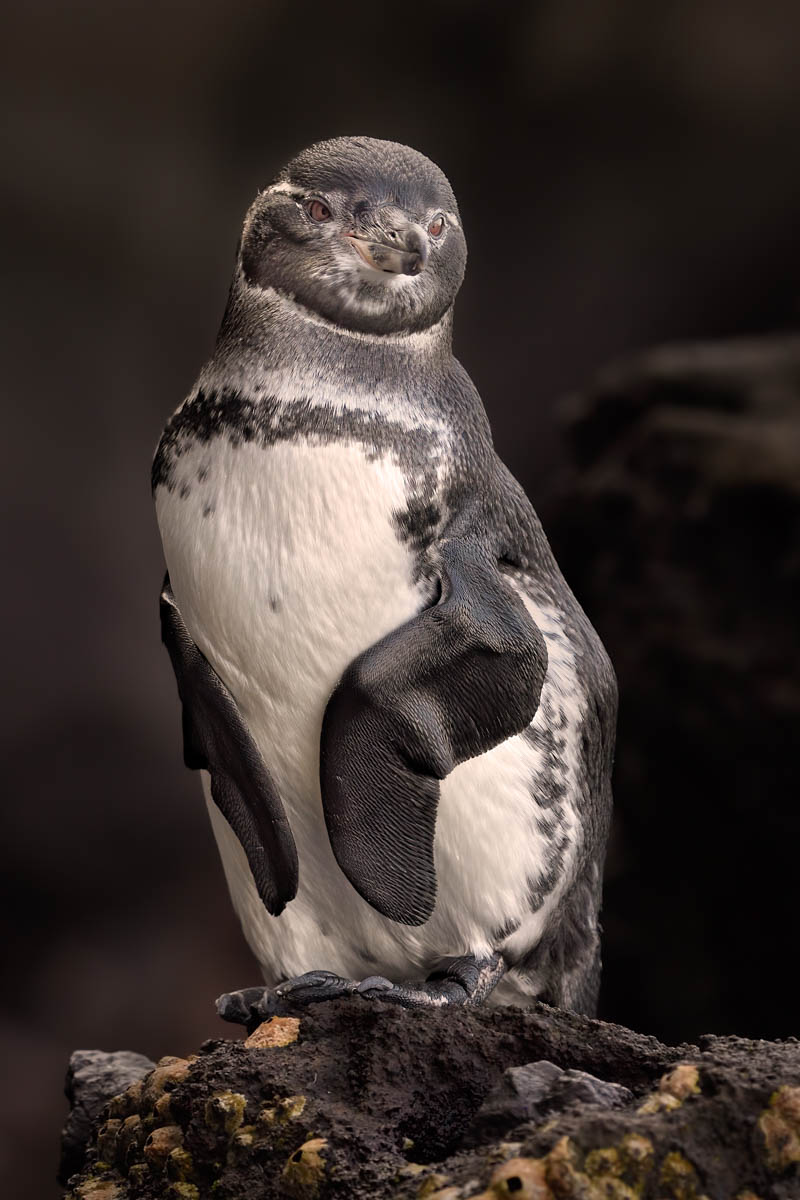
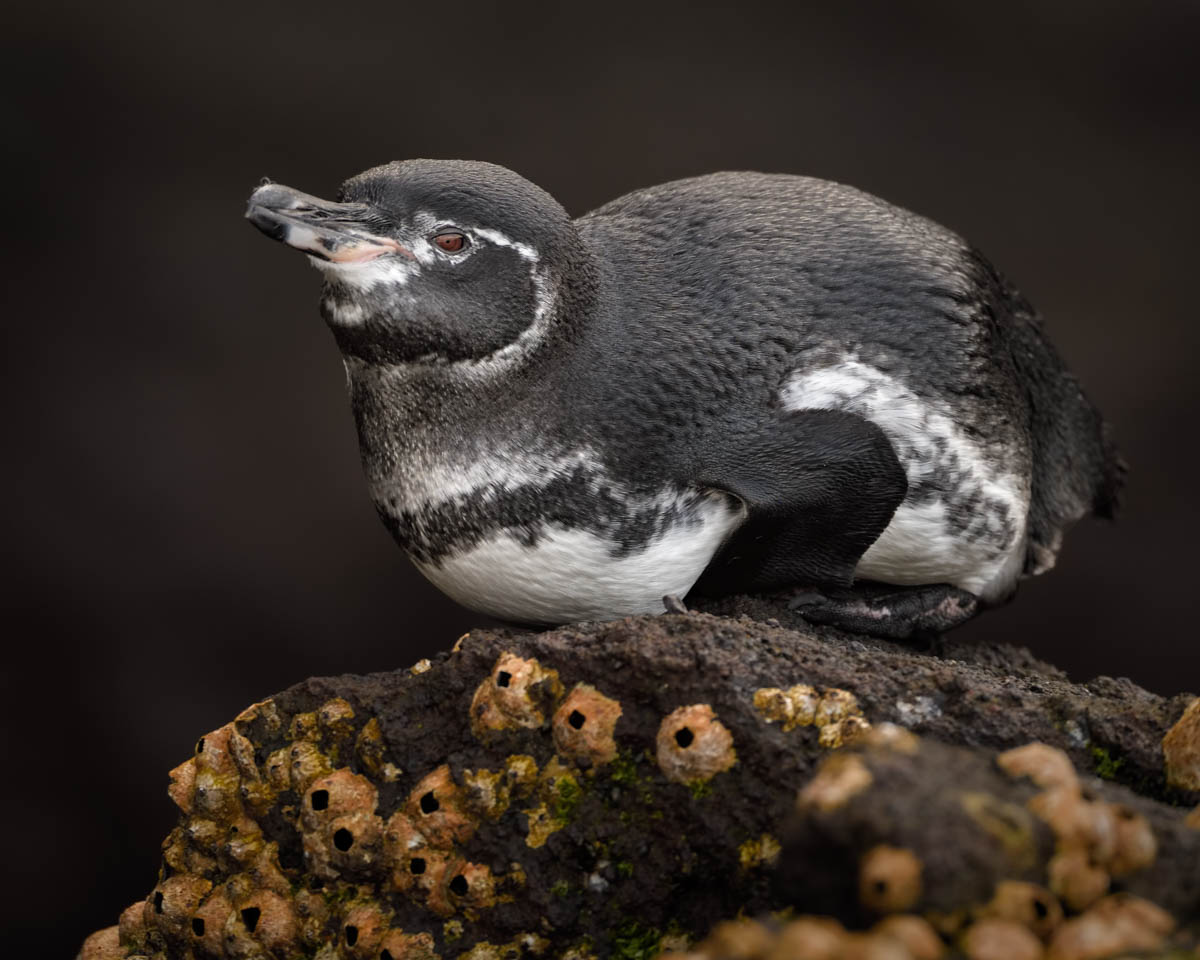
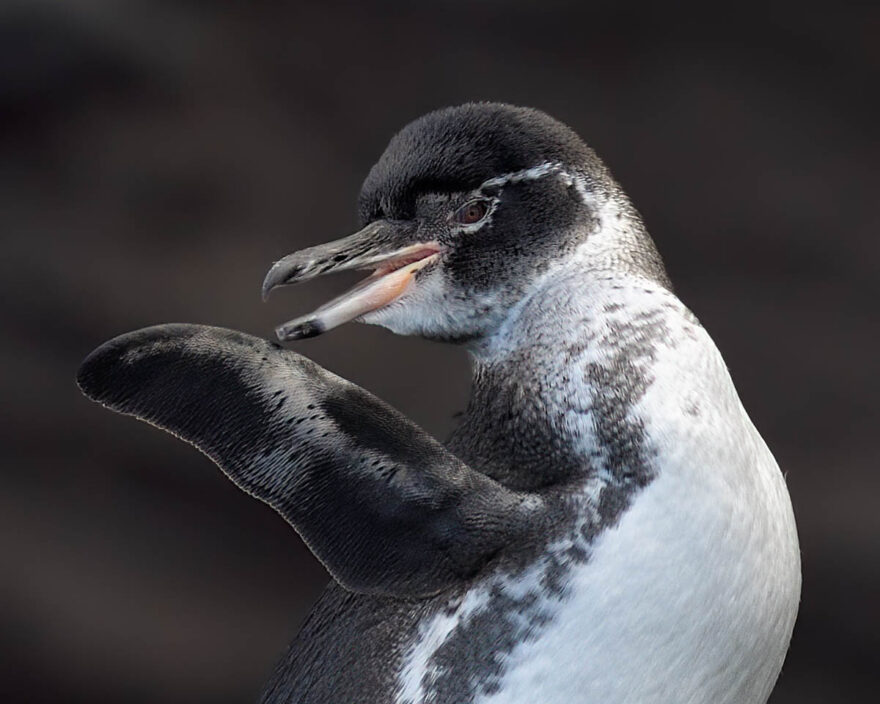
This endemic Galápagos penguin might look a bit awkward and pudgy on land, but don’t be fooled: it swims so fast through the water that you’ll never be able to keep up.
Because Shetzers Photography must pay fees for reservations and leases of accommodations and transportation needs for the group far in advance of the workshop, all paid tour fees are non-refundable, non-transferable and cannot be applied to a future workshop.
Shetzers Photography runs group workshops and wants to ensure the workshops are not canceled due to participant cancellations thus impacting the participants who do not cancel. All tour cancellations must be submitted in writing and will result in loss of deposit and all fees paid.
Please review our Workshop Terms and Conditions.
COVID-19 and Variants Policy: If regulatory restrictions in the hosting location prevent the workshop from running as scheduled, the workshop will be cancelled and all funds returned. All participants must meet hosting country vaccination requirements. No refunds or rescheduling will be allowed due to guest cancellations when the workshop is able to run following all host location regulatory restrictions.
WAITING LIST – IF A TRIP IS SOLD OUT
Over the last few years all of our trips have sold out. We start to fill up about a year before the workshop and keep the website updated with the current workshop availability. If a workshop is full/sold out you can add your name to the waitlist. If a spot becomes available we will contact the guests immediately on the waitlist in the order they signed up. We tend to have the most cancellations 90-180 days before a trip starts so being on the waitlist can help you get on a sold out trip. We require no deposit to be on the waitlist.
PAYMENT/RESERVATIONS
The base cost for the eclipse tour is $14,995.00 USD. Unfortunately we do not have single room availability due to the yacht’s room layout. We will gladly pair you up with a roommate of the same gender if requested.
To reserve a spot on this tour, we require a $3,000.00 deposit per person that is paid by credit card at the time of registration. A payment of $5,000.00 USD will be due on March 1st 2027, and the remaining payments must be completed 90 days prior to the trip. All payments except for the deposit are paid by check or bank transfer.
One year prior to the trip a detailed trip planning package will be sent to each guest to assist in planning for the best photography workshop.
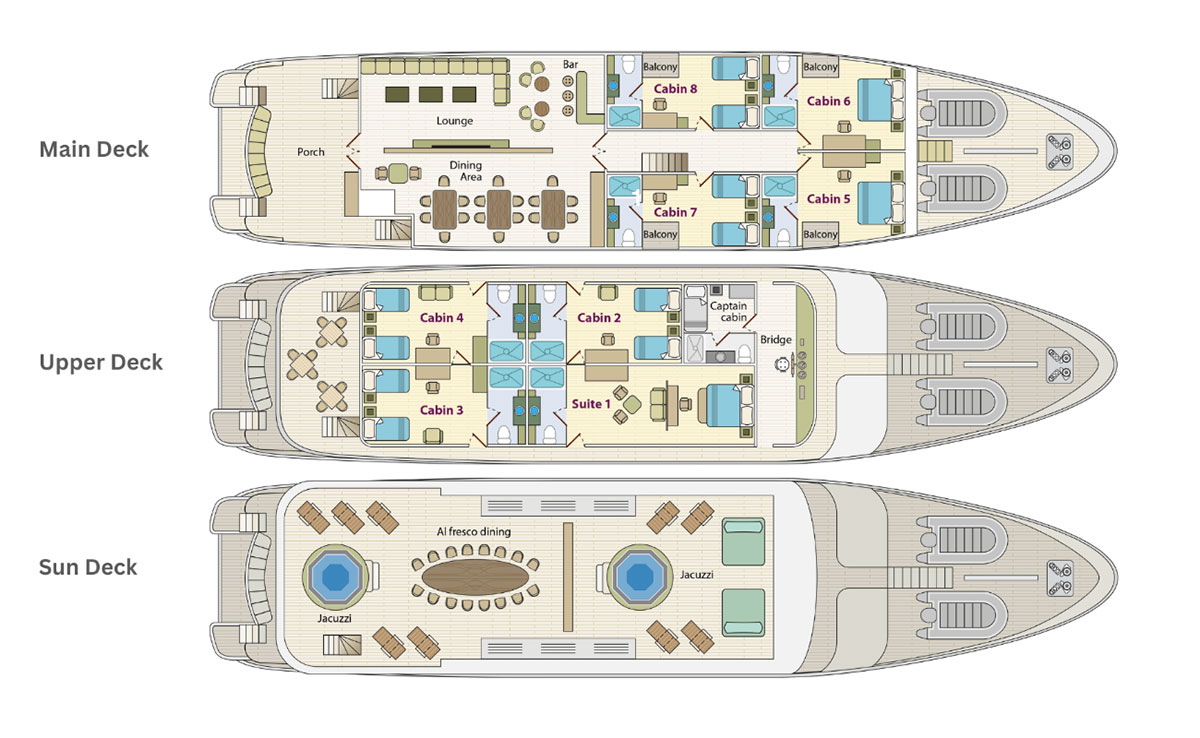
Galapagos Cruise Deck Layout. Click to enlarge
Galapagos Cruise Cabin Upgrades:
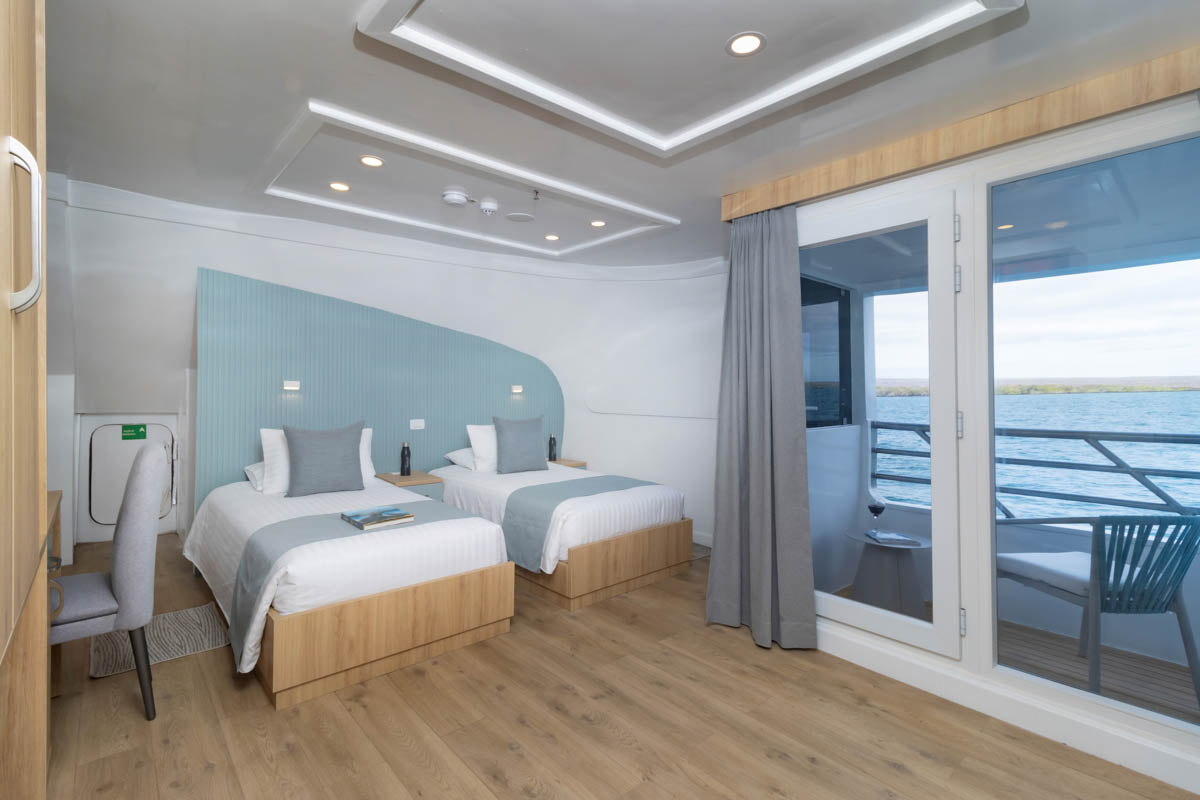
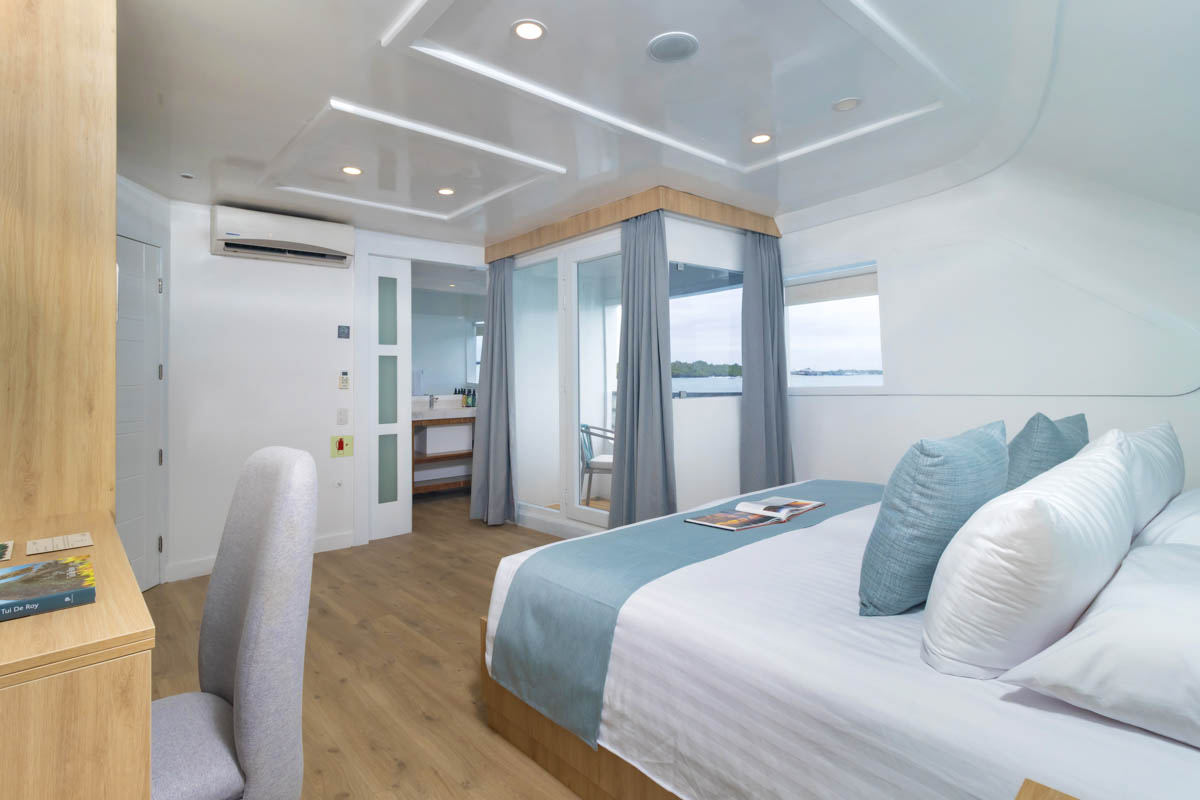
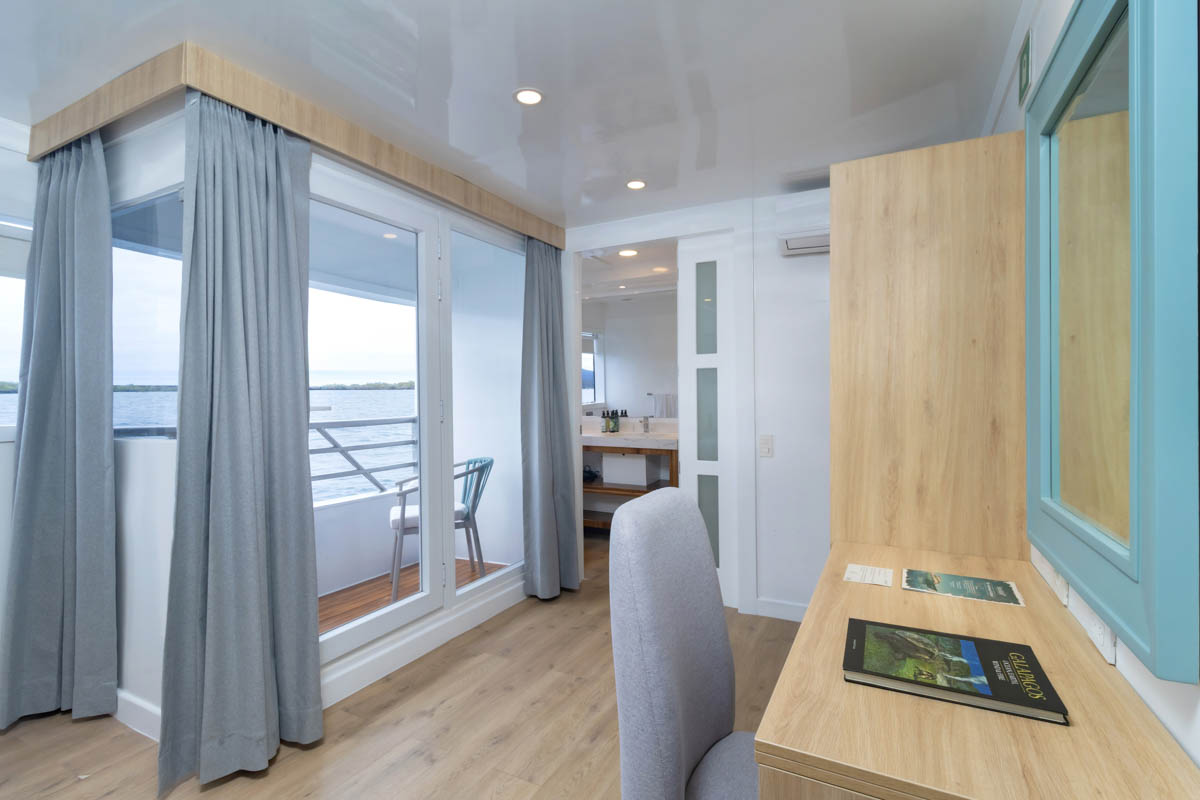
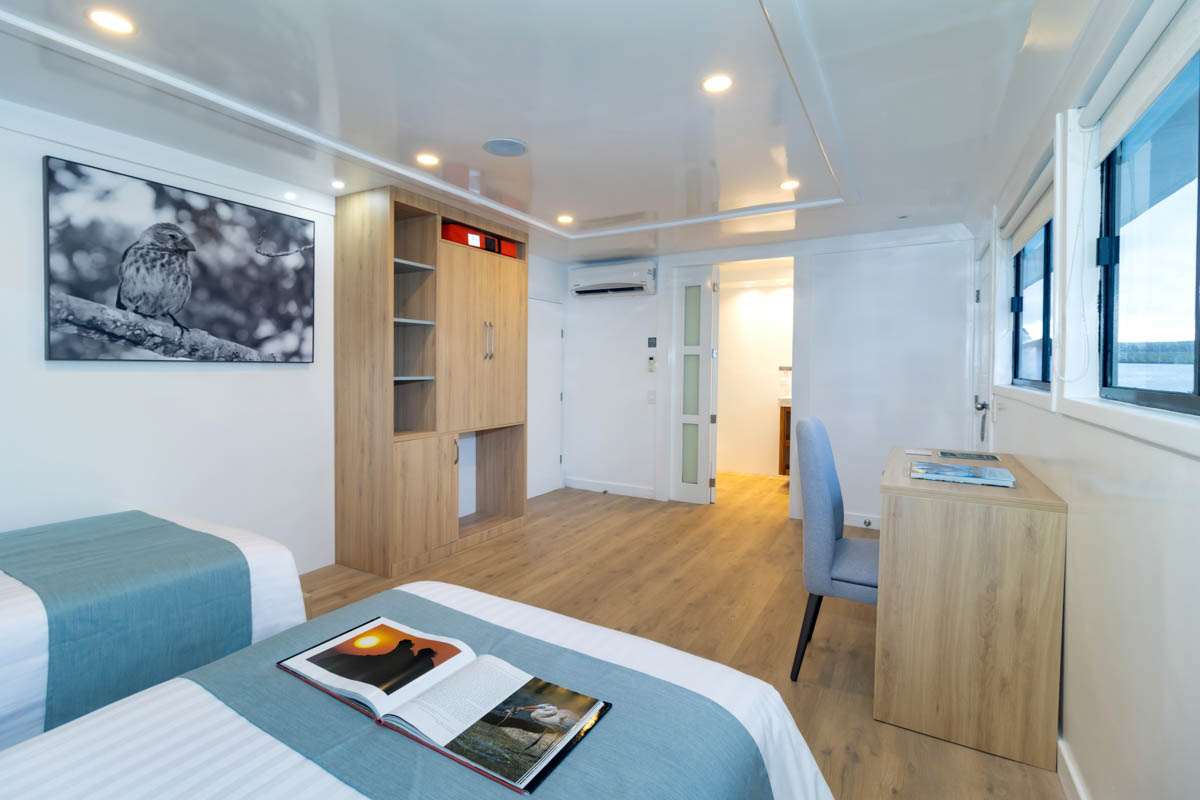
- Upper Deck Cabins – 3 Available. Step into a generous retreat designed for rest and privacy. This roomy 270-square-foot cabin gives you space to unwind after a day on the water. Choose two twin beds or one king bed, depending on your party. Base Price
- Main Deck Balcony Cabins – 2 Available. Settle into a spacious cabin with room to relax. Step out onto your private balcony to enjoy fresh air and the view, then come back in to a comfortable space with flexible sleeping arrangements: two twin beds or one king. $1,000 additional per person based on double occupancy.
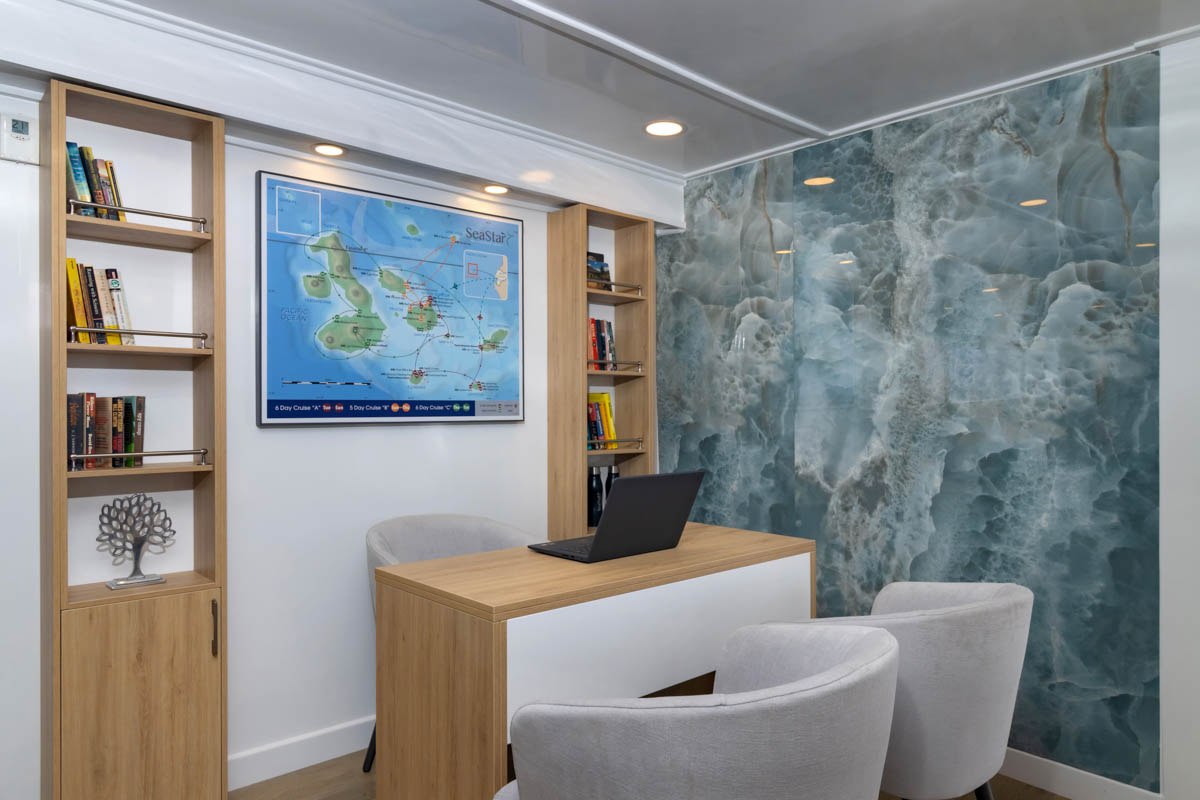
- Upper Deck Suite – 1 Available – Our finest accommodation, the Upper Deck Suite, is the best suite aboard. Its generous 375 square feet give you room to spread out. A king bed anchors the sleeping area, while the large sitting area offers a sofa bed for guests and a desk for work or planning. $2,000 additional per person based on double occupancy.
Our workshops are based upon a first come, first serve basis. Workshop availability will be updated on this page.
If you have any additional questions or would like to speak to us, please contact us at 303-888-2710 and we would be happy to answer your questions.
Register for the 2028 Galápagos Ring of Fire Eclipse Tour »